
Can a DC servo motor be used in a 3D printer? This is a question that often comes up among 3D printing enthusiasts and professionals alike. As a DC servo motor supplier, I've had the opportunity to explore this topic in depth and understand the potential benefits and challenges of using DC servo motors in 3D printers.
Understanding DC Servo Motors
Before delving into their application in 3D printers, it's essential to understand what DC servo motors are. A DC servo motor is a type of motor that can precisely control its position, speed, and torque. It consists of a DC motor, a feedback device (usually an encoder), and a control circuit. The feedback device continuously monitors the motor's position and speed and sends this information to the control circuit. The control circuit then adjusts the motor's input voltage to ensure that it operates at the desired position, speed, or torque.
DC servo motors offer several advantages over other types of motors, such as stepper motors, which are commonly used in 3D printers. They provide higher torque at low speeds, better speed control, and higher accuracy. Additionally, they can respond quickly to changes in the control signal, making them suitable for applications that require rapid and precise movements.
Advantages of Using DC Servo Motors in 3D Printers
1. High Precision
One of the primary requirements of a 3D printer is to achieve high precision in the printed objects. DC servo motors can provide extremely accurate positioning, which is crucial for creating detailed and complex 3D models. The feedback mechanism in DC servo motors allows them to correct any errors in position or speed, ensuring that the printer head moves precisely along the intended path. This results in better print quality, with smoother surfaces and more accurate dimensions.
2. High Torque
3D printers often need to move heavy components, such as the print head and the build platform. DC servo motors can deliver high torque at low speeds, which is necessary for moving these components smoothly and efficiently. This high torque capability also allows the printer to handle larger and more complex prints without sacrificing speed or quality.
3. Speed Control
DC servo motors offer excellent speed control, which is essential for optimizing the printing process. Different parts of a 3D model may require different printing speeds to achieve the best results. For example, intricate details may need to be printed at a slower speed to ensure accuracy, while larger areas can be printed more quickly. With a DC servo motor, the printer can easily adjust the speed of the print head to match the requirements of each part of the model.
4. Dynamic Response
In 3D printing, the printer head needs to make rapid changes in direction and speed. DC servo motors can respond quickly to these changes, thanks to their high dynamic response. This means that the printer can start, stop, and change direction smoothly and efficiently, reducing the risk of print defects and improving overall productivity.
Challenges of Using DC Servo Motors in 3D Printers
1. Cost
One of the main challenges of using DC servo motors in 3D printers is their cost. DC servo motors are generally more expensive than stepper motors, which are the most commonly used motors in 3D printers. The additional cost of the feedback device and the control circuit can make the overall system more expensive. However, as the technology advances and the demand for high-quality 3D printing increases, the cost of DC servo motors is expected to decrease over time.
2. Complexity
DC servo motors require a more complex control system than stepper motors. The feedback mechanism and the control circuit need to be carefully calibrated and tuned to ensure optimal performance. This can make the installation and maintenance of the 3D printer more challenging, especially for beginners. Additionally, the complexity of the control system may increase the risk of system failures and require more technical expertise to troubleshoot.
3. Power Consumption
DC servo motors typically consume more power than stepper motors. This can be a concern, especially for large-scale 3D printers that run continuously for long periods. Higher power consumption not only increases the operating cost but also generates more heat, which may require additional cooling measures to prevent damage to the motor and other components.
Types of DC Servo Motors Suitable for 3D Printers
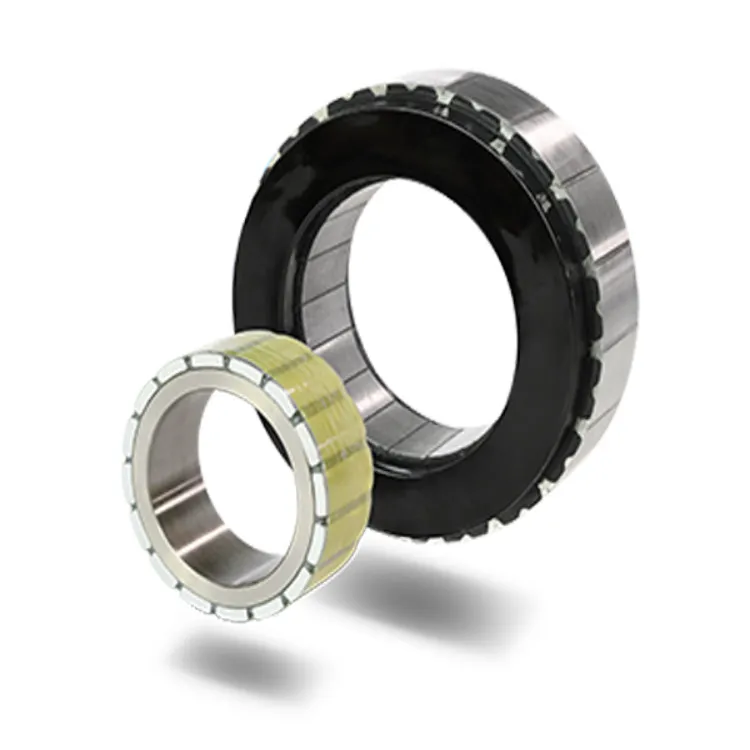
1. Frameless Torque Motor
Frameless torque motors, such as the ones available at Frameless Torque Motor, are a type of DC servo motor that offers high torque density and compact size. They are ideal for applications where space is limited, such as in 3D printers. Frameless torque motors can provide high torque output without the need for a bulky housing, making them suitable for integration into the printer's design.
2. Integrated Servo Wheel
Integrated servo wheels, like those found at Integrated Servo Wheel, combine a DC servo motor, a gearbox, and a wheel into a single unit. This integration simplifies the design of the 3D printer and reduces the number of components required. Integrated servo wheels are easy to install and can provide smooth and precise movement, making them a popular choice for 3D printer applications.
3. Low-voltage Servo Motor
Low-voltage servo motors, such as the ones described at Low-voltage Servo Motor, are designed to operate at lower voltages, which can reduce power consumption and heat generation. They are suitable for 3D printers that are powered by batteries or low-voltage power supplies. Low-voltage servo motors can also provide high performance and precision, making them a viable option for small and medium-sized 3D printers.
Conclusion
In conclusion, DC servo motors can be a great choice for 3D printers, offering high precision, high torque, excellent speed control, and dynamic response. While they do come with some challenges, such as higher cost, complexity, and power consumption, the benefits they provide in terms of print quality and performance can outweigh these drawbacks, especially for professional and high-end 3D printing applications.
If you're considering using DC servo motors in your 3D printer or need more information about our products, we'd be happy to assist you. Our team of experts can help you choose the right DC servo motor for your specific requirements and provide you with technical support and guidance. Contact us today to start a discussion about your 3D printing needs and how our DC servo motors can enhance your printing experience.
References
- "Servo Motors and Drives: Fundamentals, Types and Applications" by Peter A. Cross
- "3D Printing Technologies: Principles and Applications" by Ian Gibson, David W. Rosen, and Brent Stucker