

In the realm of industrial automation, Programmable Logic Controllers (PLCs) stand as the backbone of countless manufacturing and control systems. As a leading general PLC supplier, we're often approached by professionals seeking to expand their understanding of PLC programming techniques, specifically the use of shift registers. Shift registers are an incredibly versatile and powerful tool within the PLC environment, and in this blog post, we'll delve into how you can effectively utilize them in your general PLC programs.
Understanding Shift Registers in PLCs
Before we explore the practical applications, let's first understand what a shift register is. A shift register is a sequential logic circuit that can store and shift data bits. In a PLC, a shift register is a memory structure that holds a sequence of binary values. Each bit in the register can be thought of as a separate memory location. The primary operation of a shift register is to move data from one bit position to the next, either to the left or to the right.
There are two main types of shift operations:
- Left Shift: In a left shift operation, all the bits in the register are moved one position to the left. The leftmost bit is discarded, and a new bit is inserted at the rightmost position.
- Right Shift: Conversely, in a right shift operation, all the bits are moved one position to the right. The rightmost bit is discarded, and a new bit is inserted at the leftmost position.
Why Use Shift Registers in PLC Programs?
Shift registers offer several advantages in PLC programming:
- Sequential Control: They are ideal for implementing sequential processes where operations need to be performed in a specific order. For example, in a bottling plant, a shift register can be used to control the sequence of filling, capping, and labeling operations.
- Data Storage and Manipulation: Shift registers can store and manipulate binary data efficiently. They are useful for tasks such as counting events, generating patterns, and buffering data.
- Timing and Delay: By using a shift register, you can introduce precise timing and delays in your PLC program. Each shift operation can represent a specific time interval, allowing you to create complex timing sequences.
Implementing Shift Registers in a General PLC Program
Step 1: Define the Shift Register in Your PLC
The first step is to define the shift register in your PLC's memory. Most PLC programming languages, such as ladder logic or structured text, provide built - in functions or instructions for working with shift registers.
In ladder logic, you can use a shift register instruction block to define the register's length and initial state. For example, if you're using a EtherCAT Bus PLC, you might define a 16 - bit shift register as follows:
LADDER BROWSER
TITLE: Shift Register Example
Network 1: Initialize Shift Register
LD I0.0 // Start signal
SHRB QW0,1,16 // Shift right byte array QW0, insert 1 bit, length 16 bits
In this example, QW0 represents the memory location where the shift register is stored, 1 is the bit to be inserted during the shift operation, and 16 is the length of the shift register.
Step 2: Control the Shift Operation
Once you've defined the shift register, you need to control when the shift operation occurs. This is typically done using input signals or timers.
For instance, you can use a timer to trigger the shift operation at regular intervals. Suppose you want to shift the register every 1 second. You can use a timer instruction in your PLC program:
LADDER BROWSER
TITLE: Shift Register with Timer
Network 1: Timer Setup
TON T37,1000 // Timer T37 with a preset value of 1000 ms
Network 2: Shift Operation
LD T37 // When the timer times out
SHRB QW0,0,16 // Shift right QW0, insert 0, length 16 bits
In this code snippet, the timer T37 is set to time out after 1000 milliseconds (1 second). When the timer times out, the shift register QW0 is shifted one position to the right, inserting a 0 bit at the leftmost position.
Step 3: Use the Shift Register Output
The output of the shift register can be used to control various devices or perform other operations in your PLC program. For example, you can use the individual bits of the shift register to control relays, motors, or other output devices.
LADDER BROWSER
TITLE: Using Shift Register Output
Network 1: Control Output
LD QW0.0 // Check the first bit of the shift register
OUT Q0.0 // If the bit is HIGH, turn on output Q0.0
In this example, the state of the first bit in the shift register QW0 is used to control the output Q0.0. If the bit is 1, the output Q0.0 is turned on.
Practical Applications of Shift Registers
Conveyor Belt Control
In a manufacturing facility, conveyor belts are often used to transport products from one station to another. A shift register can be used to control the sequence of operations along the conveyor belt. For example, you can use a shift register to activate sensors at different stations in a specific order, ensuring that products are inspected, sorted, or packaged correctly.
Portfolio String Lighting
In decorative lighting applications, a shift register can be used to create dynamic lighting effects. By shifting the bits in the register, you can turn on and off different strings of lights in a sequential or random pattern, creating an eye - catching display.
Machine Tool Control
In machine tool applications, shift registers can be used to control the sequence of operations in a machining process. For example, they can be used to control the movement of the tool, the activation of cutting fluids, and the monitoring of tool wear.
Choosing the Right PLC for Shift Register Applications
When working with shift registers in your PLC programs, it's important to choose the right PLC for your application. Here at our company, we offer a range of PLCs that are well - suited for shift register applications:
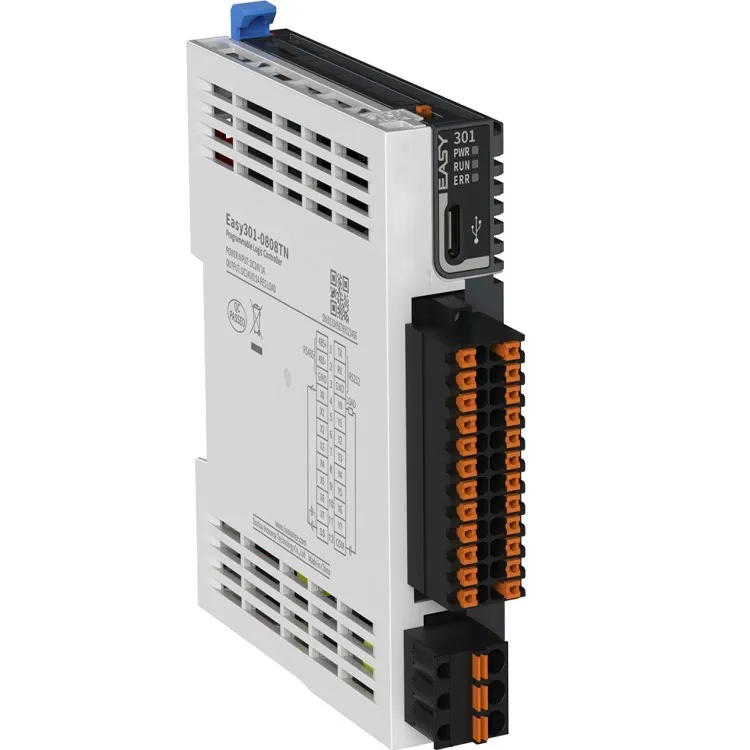
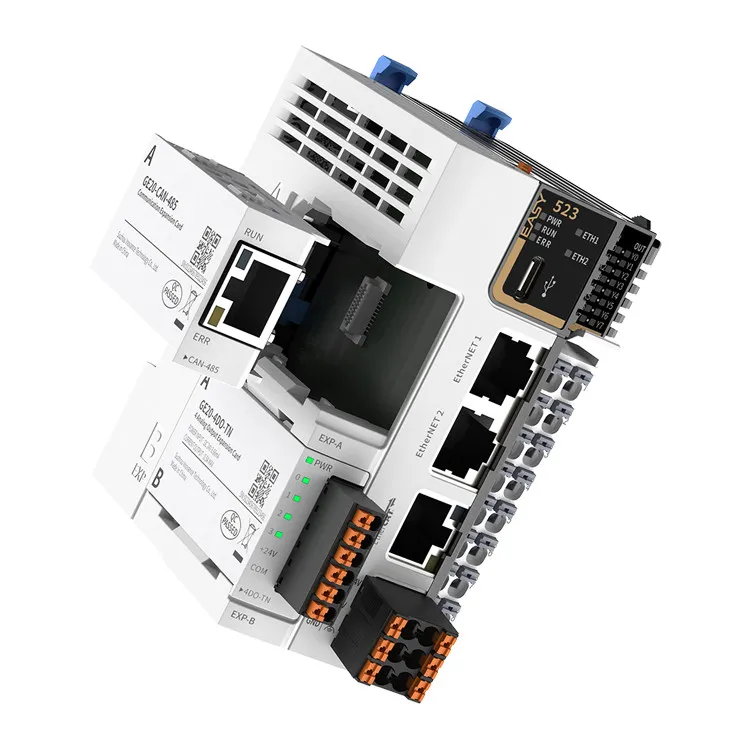
- EtherCAT Bus PLC: This PLC offers high - speed communication capabilities and is ideal for applications that require real - time data processing and control.
- Compact Mini PLC: If you're working on a small - scale project or have limited space, the Compact Mini PLC is a great choice. It's compact, easy to install, and offers all the essential features for shift register programming.
- 485 Pulse PLC: This PLC is designed for applications that require pulse control and communication over the RS - 485 bus. It's a reliable option for controlling motors, steppers, and other devices.
Conclusion
Shift registers are a powerful and versatile tool in PLC programming. They offer a simple yet effective way to implement sequential control, data storage, and timing functions in your PLC programs. By understanding how to define, control, and use shift registers, you can enhance the functionality and efficiency of your industrial automation systems.
If you're interested in learning more about how to use shift registers in your PLC programs or if you're looking for the right PLC for your application, we're here to help. Our team of experts has years of experience in PLC programming and can provide you with the support and guidance you need. Contact us today to start a conversation about your specific requirements and explore how our products can meet your needs.
References
- "Programmable Logic Controllers" - A textbook on PLC fundamentals and programming techniques.
- Manufacturer's documentation for EtherCAT Bus PLC, Compact Mini PLC, and 485 Pulse PLC.
- Industrial automation magazines and online resources for real - world examples of shift register applications in PLC programs.