
As a supplier in the stepper system industry, I've witnessed firsthand the widespread use and benefits of stepper systems. Stepper systems are known for their precision, simplicity, and cost - effectiveness, making them a popular choice in various applications such as robotics, 3D printing, and CNC machines. However, like any technology, stepper systems using open - loop control have their limitations. In this blog, I'll delve into these limitations to help you better understand when open - loop control in a stepper system might not be the best option.
1. Lack of Feedback and Position Accuracy
One of the most significant limitations of open - loop control in a stepper system is the absence of feedback. In an open - loop system, the controller sends a series of pulses to the stepper motor, and the motor is expected to move a specific number of steps in response to each pulse. There is no mechanism to verify if the motor has actually reached the desired position.
This lack of feedback can lead to position errors over time. For example, if there is an external load on the motor that exceeds its torque capacity, the motor may miss steps. These missed steps are not detected in an open - loop system, and the controller will continue to operate as if the motor is in the correct position. In applications where high precision is crucial, such as in semiconductor manufacturing or high - end 3D printing, these position errors can be unacceptable.
Let's take a look at a scenario in a 3D printing application. A 2 Phase Stepper Motor is commonly used in 3D printers to control the movement of the print head. If the motor misses a step during the printing process, the printed object may have defects, such as uneven layers or incorrect dimensions. Since there is no feedback to correct these errors in an open - loop system, the quality of the final product can be severely compromised.
2. Limited Torque and Speed Range
Open - loop stepper systems also have a limited torque and speed range. The torque output of a stepper motor decreases as the speed increases. In an open - loop system, the controller cannot adjust the drive current based on the actual load or speed conditions.
At low speeds, the motor can typically provide sufficient torque to drive the load. However, as the speed increases, the motor's ability to generate torque diminishes. If the load requires more torque than the motor can provide at a given speed, the motor may stall. Once the motor stalls in an open - loop system, it may not be able to recover without manual intervention.
For instance, in a robotic arm application, a 3 Phase Stepper Motor might be used to control the movement of the arm. If the arm needs to move quickly to perform a task, the motor may not be able to generate enough torque at high speeds. This can result in the arm moving slower than expected or not being able to reach the desired position at all.
3. Resonance Issues
Resonance is another problem associated with open - loop control in stepper systems. Stepper motors have natural resonant frequencies at which they tend to vibrate more than at other frequencies. In an open - loop system, the controller sends pulses at a fixed rate, and if this rate coincides with the motor's resonant frequency, the motor can experience excessive vibration.
These vibrations can cause several issues. Firstly, they can lead to mechanical wear and tear on the motor and the connected components. Over time, this can reduce the lifespan of the system. Secondly, the vibrations can also affect the accuracy of the system. For example, in a precision measurement device using a stepper motor for positioning, the vibrations can cause the measurement to be inaccurate.
To mitigate resonance issues, engineers often need to carefully select the operating speed of the motor to avoid the resonant frequencies. However, this can limit the flexibility of the system and may not be practical in all applications.
4. Inability to Adapt to Changing Loads
Open - loop stepper systems are not well - suited for applications where the load changes dynamically. Since there is no feedback in the system, the controller cannot adjust the drive signals based on the actual load conditions.
Consider a conveyor belt system that uses a stepper motor to drive the belt. If the load on the conveyor belt changes, such as when more or fewer items are placed on the belt, the motor may experience different levels of resistance. In an open - loop system, the controller will continue to send the same number of pulses at the same rate, regardless of the load change. This can lead to the motor either over - or under - performing, resulting in inefficient operation and potential damage to the motor.
5. Lack of System Monitoring and Diagnosis
Without feedback, open - loop stepper systems lack the ability to monitor and diagnose problems. In a closed - loop system, sensors can provide information about the motor's position, speed, and temperature, allowing the controller to detect and respond to issues such as overheating or abnormal movement.
In an open - loop system, it can be difficult to determine if the motor is operating correctly. For example, if the motor is experiencing a mechanical problem, such as a bearing failure, there is no way for the system to detect this in real - time. This can lead to unexpected system failures and costly downtime.
When to Consider an Alternative
Despite these limitations, open - loop stepper systems still have their place in many applications where high precision, dynamic load handling, and real - time monitoring are not critical. However, if your application requires high accuracy, a wide torque and speed range, the ability to adapt to changing loads, or system monitoring and diagnosis, you may want to consider alternative control methods, such as closed - loop control.
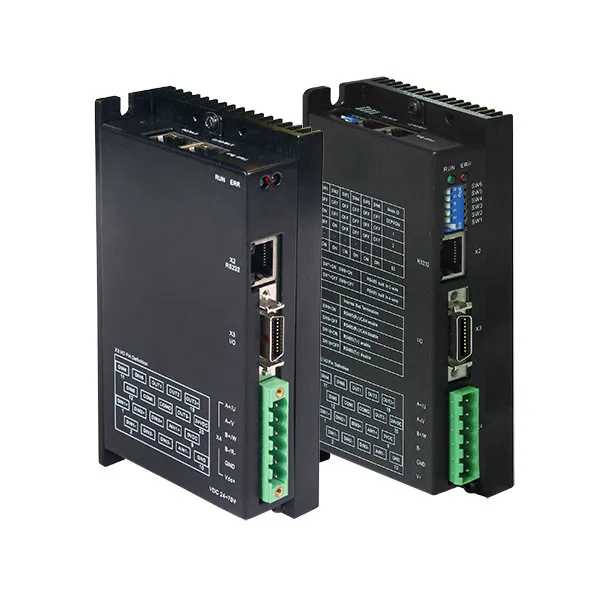
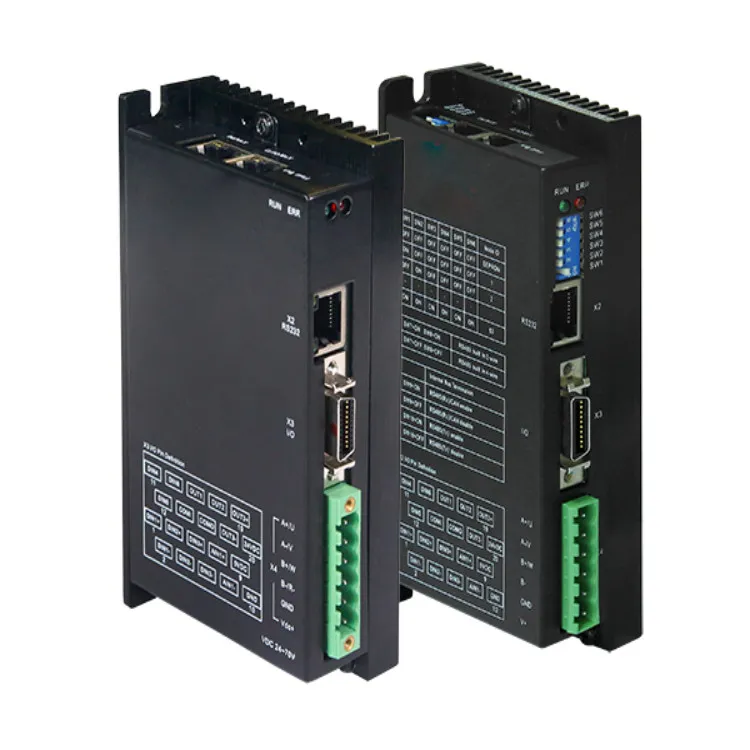
We offer a range of Field Bus Stepper Driver products that can be used in both open - loop and closed - loop configurations. Our team of experts can help you determine the best solution for your specific application.
If you're facing challenges with the limitations of open - loop control in your stepper system or are looking for a more advanced solution, we encourage you to reach out to us for a detailed discussion. We can provide customized solutions based on your requirements and help you optimize the performance of your system.
In conclusion, while open - loop control in stepper systems has its advantages, such as simplicity and cost - effectiveness, it also has significant limitations. Understanding these limitations is crucial for making informed decisions when selecting a stepper system for your application. Whether you're in the early stages of product development or looking to upgrade an existing system, we're here to assist you. Contact us today to start the conversation about your stepper system needs.
References
- "Stepper Motor Control Handbook" by Peter C. Sen.
- "Motion Control Systems: Basics, Mechatronics, and Servo" by R. Kent Leland.
- Industry white papers on stepper motor technology from leading manufacturers.