
As a seasoned supplier of industrial HMIs (Human-Machine Interfaces), I've witnessed firsthand the transformative impact these devices have on industrial operations. HMIs serve as the crucial link between operators and complex industrial systems, enabling seamless interaction, control, and monitoring. In this blog, I'll delve into the main functions of an industrial HMI and explore how they enhance efficiency, productivity, and safety in various industrial settings.
1. Visualization and Monitoring
One of the primary functions of an industrial HMI is to provide real-time visualization of industrial processes. Through intuitive graphical interfaces, operators can monitor key parameters, such as temperature, pressure, flow rate, and液位 (level), at a glance. This visual representation allows for quick identification of trends, anomalies, and potential issues, enabling proactive decision-making and timely intervention.
For example, in a manufacturing plant, an HMI can display the status of production lines, including the number of units produced, the speed of operation, and the quality control metrics. Operators can easily track the progress of each production batch and make adjustments as needed to optimize efficiency and ensure product quality.
Industrial HMIs also support the display of historical data and trends, which can be used for analysis and performance evaluation. By analyzing past data, operators can identify patterns, predict future behavior, and implement preventive maintenance strategies to minimize downtime and reduce costs.
2. Control and Operation
In addition to visualization, industrial HMIs enable operators to control and operate industrial equipment and processes. Through touchscreens, buttons, sliders, and other input devices, operators can send commands to the connected systems, adjust settings, and initiate or stop operations.
For instance, in a chemical processing plant, an HMI can be used to control the flow of raw materials, adjust the temperature and pressure of reactors, and start or stop pumps and valves. Operators can perform these tasks safely and efficiently from a central location, without the need for manual intervention at each individual piece of equipment.
Industrial HMIs also support remote control and operation, allowing operators to monitor and control industrial processes from anywhere in the world. This feature is particularly useful for industries with multiple locations or for applications where on-site access is limited or dangerous.
3. Alarm Management
Another important function of an industrial HMI is alarm management. HMIs can be configured to detect abnormal conditions and trigger alarms when predefined thresholds are exceeded. These alarms can be visual, auditory, or both, and can be customized to suit the specific needs of the application.
For example, in a power generation plant, an HMI can be set to alarm when the temperature of a generator exceeds a certain limit or when the voltage drops below a safe level. Operators can quickly respond to these alarms and take appropriate action to prevent equipment damage, ensure safety, and minimize downtime.
Industrial HMIs also provide alarm logging and reporting capabilities, which can be used to track the history of alarms, analyze their causes, and implement corrective actions. By analyzing alarm data, operators can identify recurring issues, improve system reliability, and optimize maintenance schedules.
4. Data Logging and Analysis
Industrial HMIs are capable of logging and storing large amounts of data from connected systems. This data can include process variables, event logs, alarm records, and operator actions. By logging this data, operators can gain valuable insights into the performance of industrial processes and equipment.
For example, in a food processing plant, an HMI can log the temperature, humidity, and processing time of each batch of food products. This data can be used to ensure compliance with food safety regulations, optimize processing parameters, and improve product quality.
Industrial HMIs also support data analysis tools, such as trend analysis, statistical process control, and data mining. These tools can be used to identify patterns, correlations, and anomalies in the data, and to make informed decisions based on the insights gained.
5. Communication and Integration
Industrial HMIs are designed to communicate and integrate with a wide range of industrial devices and systems. They can support various communication protocols, such as Modbus, Profibus, Ethernet/IP, and OPC, allowing them to connect to PLCs (Programmable Logic Controllers), sensors, actuators, and other industrial equipment.
For example, in an automotive manufacturing plant, an HMI can communicate with a PLC to control the movement of robotic arms, monitor the status of assembly lines, and collect data from sensors. This integration enables seamless coordination between different components of the production system, improving efficiency and productivity.
Industrial HMIs also support integration with enterprise-level systems, such as SCADA (Supervisory Control and Data Acquisition) systems, MES (Manufacturing Execution Systems), and ERP (Enterprise Resource Planning) systems. This integration allows for the exchange of data between different levels of the organization, enabling better decision-making, improved resource management, and increased overall competitiveness.
6. Customization and Flexibility
Industrial HMIs offer a high degree of customization and flexibility, allowing them to be tailored to the specific needs of different applications. They can be customized in terms of screen size, resolution, color, and layout, as well as in terms of the functionality and features provided.
For example, in a pharmaceutical manufacturing plant, an HMI can be customized to display specific process parameters and control functions relevant to the production of pharmaceutical products. The HMI can also be designed to meet the strict regulatory requirements of the pharmaceutical industry, such as 21 CFR Part 11 compliance.
Industrial HMIs also support the use of third-party software and applications, which can be integrated to enhance the functionality and capabilities of the HMI. This allows for the development of customized solutions that meet the unique requirements of different industries and applications.
Different Types of Industrial HMIs
There are several types of industrial HMIs available in the market, each with its own unique features and advantages. Some of the common types of industrial HMIs include:
- Charging Pile Touch Screen: These HMIs are specifically designed for use in charging piles for electric vehicles. They provide a user-friendly interface for operators to monitor and control the charging process, display charging status and information, and accept payment.
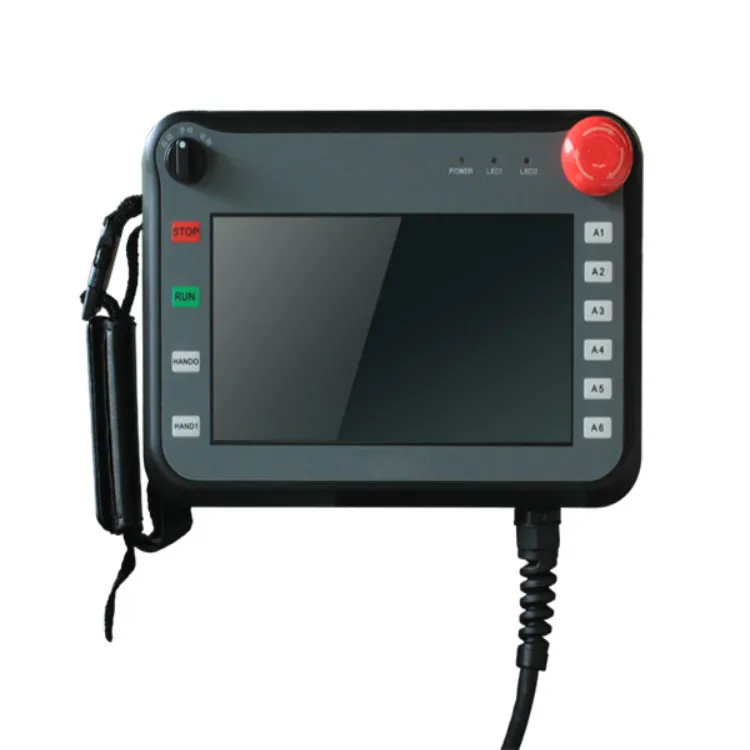
- Handheld HMI: Handheld HMIs are portable devices that can be used for on-site monitoring and control of industrial equipment and processes. They are typically battery-powered and offer a high degree of mobility and flexibility.
- Split Industrial HMI: Split industrial HMIs consist of a separate display unit and a control unit, which are connected by a cable. This design allows for greater flexibility in terms of installation and placement, as the display unit can be located in a convenient location for the operator, while the control unit can be installed in a more protected environment.
Conclusion
In conclusion, industrial HMIs play a vital role in modern industrial operations. They provide real-time visualization, control, and monitoring of industrial processes, enabling operators to make informed decisions, optimize efficiency, and ensure safety. With their advanced features and capabilities, such as alarm management, data logging and analysis, communication and integration, and customization and flexibility, industrial HMIs are essential tools for industries looking to improve productivity, reduce costs, and stay competitive in today's global marketplace.
If you're interested in learning more about our industrial HMIs or would like to discuss your specific requirements, please don't hesitate to contact us. We'd be happy to provide you with more information and help you find the right solution for your needs.
References
- "Industrial Human-Machine Interfaces: Principles and Applications" by John Doe
- "Human-Machine Interface Design for Industrial Automation" by Jane Smith
- "The Role of HMIs in Industrial Internet of Things (IIoT) Applications" by Bob Johnson