
Hey there! As a supplier of stepper systems, I often get asked about the heat dissipation requirements for these systems. It's a crucial topic because proper heat management can significantly impact the performance and lifespan of a stepper system. So, let's dive right in and explore what these heat dissipation requirements are all about.
First off, let's understand why heat dissipation is such a big deal in a stepper system. Stepper motors and drivers generate heat during operation. This heat is mainly a by - product of the electrical energy being converted into mechanical energy, along with some losses due to electrical resistance and magnetic hysteresis. If this heat isn't dissipated effectively, it can lead to a whole bunch of problems.
One of the most immediate issues is a decrease in performance. As the temperature of the stepper motor rises, the electrical resistance of the windings increases. This means that for a given voltage, the current flowing through the windings will decrease. Since the torque output of a stepper motor is directly related to the current, a drop in current results in a reduction in torque. In some cases, the motor might even start to miss steps, which can be a major headache, especially in applications where precise positioning is required.
Another problem is the potential damage to the components. High temperatures can cause the insulation on the motor windings to degrade over time. This can lead to short - circuits, which not only render the motor useless but can also pose a safety hazard. The electronic components in the stepper driver are also sensitive to heat. Excessive heat can cause these components to fail prematurely, leading to system downtime and costly repairs.
So, what are the heat dissipation requirements for a stepper system? Well, it depends on several factors.
Motor Type
The type of stepper motor plays a significant role. For example, a 3 Phase Stepper Motor generally has different heat dissipation characteristics compared to a 2 Phase Stepper Motor. Three - phase stepper motors tend to have a more balanced distribution of current and magnetic fields, which can result in more efficient operation and potentially less heat generation. However, they still need proper heat dissipation to maintain optimal performance.
Two - phase stepper motors, on the other hand, are more commonly used in lower - cost applications. They can generate a fair amount of heat, especially when operating at high speeds or under heavy loads. The heat dissipation requirements for a two - phase stepper motor might be more demanding, and additional cooling measures might be necessary.
Operating Conditions
The way the stepper system is used also affects the heat dissipation requirements. If the motor is running continuously at high speeds, it will generate more heat than if it's operating intermittently at lower speeds. Similarly, if the motor is under a heavy load, it has to work harder, which means more heat is produced.
In some industrial applications, the stepper system might be operating in a hot environment. This can make it even more challenging to dissipate the heat effectively. For example, if the ambient temperature is already high, the temperature difference between the motor and the surrounding environment is reduced. This makes it harder for the heat to transfer from the motor to the environment, and additional cooling methods need to be employed.
Driver Design
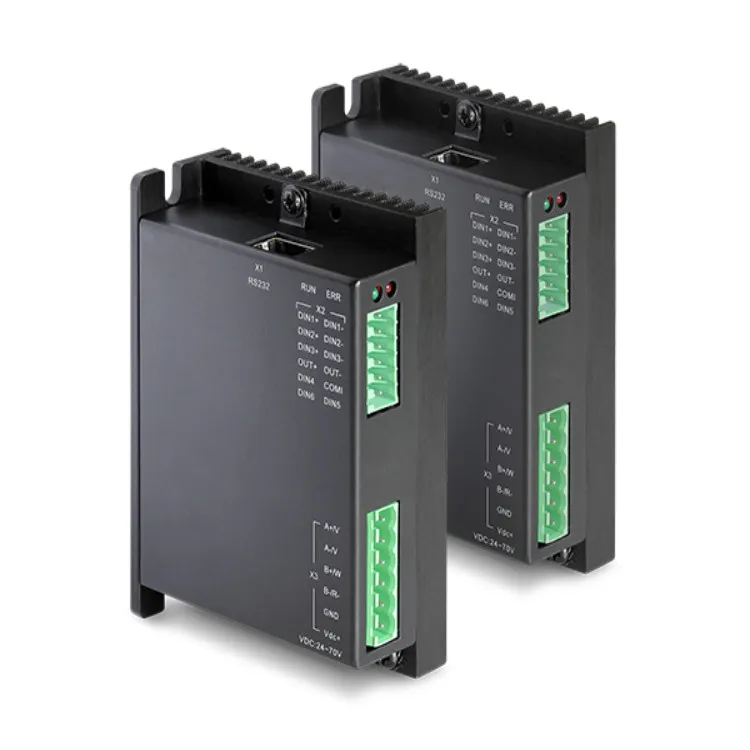
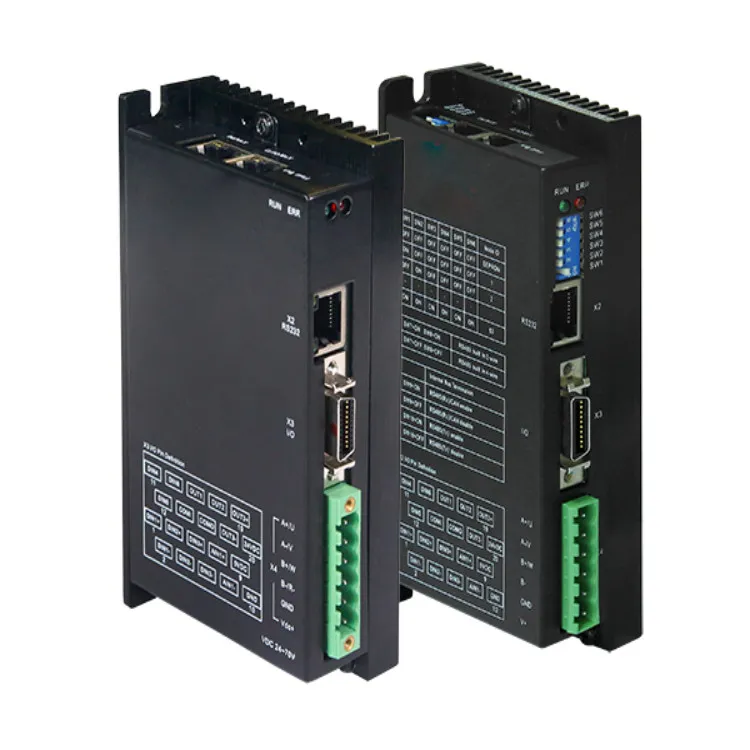
The design of the stepper driver is another important factor. A well - designed Field Bus Stepper Driver can help manage the heat better. Some drivers have built - in thermal protection features. These features can detect when the temperature of the driver exceeds a certain threshold and take appropriate action, such as reducing the current or shutting down the driver to prevent damage.
The efficiency of the driver also matters. A more efficient driver will convert more of the electrical energy into useful output and generate less heat in the process. For example, drivers that use advanced switching techniques, such as pulse - width modulation (PWM), can be more efficient and produce less heat compared to older, less sophisticated designs.
Now that we know the factors that affect the heat dissipation requirements, let's talk about some common heat dissipation methods.
Natural Convection
This is the simplest and most basic method of heat dissipation. It relies on the natural movement of air around the motor and driver. The heat is transferred from the hot components to the surrounding air, and the warm air rises, creating a natural flow of air that helps carry the heat away. However, natural convection is only effective for small - sized stepper systems or those operating at low power levels. If the system generates a large amount of heat, natural convection might not be sufficient.
Forced Air Cooling
Forced air cooling involves using a fan to blow air over the motor and driver. This increases the rate of heat transfer by increasing the airflow around the components. Fans can be either internal or external. Internal fans are built into the motor or driver housing, while external fans can be attached separately. Forced air cooling is more effective than natural convection and can handle higher power levels. However, fans do consume some power, and they also have moving parts that can wear out over time, requiring maintenance.
Heat Sinks
Heat sinks are another popular method of heat dissipation. A heat sink is a device made of a material with high thermal conductivity, such as aluminum or copper. It is attached to the motor or driver to increase the surface area available for heat transfer. The heat from the component is transferred to the heat sink, and then from the heat sink to the surrounding air. Heat sinks can be used in combination with natural convection or forced air cooling to enhance the heat dissipation efficiency.
Liquid Cooling
In some high - power applications, liquid cooling might be necessary. Liquid cooling systems use a coolant, such as water or a special coolant fluid, to absorb the heat from the motor and driver. The coolant is circulated through a heat exchanger, where the heat is transferred to the surrounding environment. Liquid cooling is very effective at removing large amounts of heat, but it is also more complex and expensive to implement compared to other methods.
In conclusion, understanding the heat dissipation requirements for a stepper system is essential for ensuring its proper operation and longevity. As a supplier of stepper systems, we can help you determine the best heat dissipation solution for your specific application. Whether you need a small - scale system for a hobby project or a high - power system for an industrial application, we've got you covered.
If you're interested in learning more about our stepper systems or need help with heat dissipation requirements, don't hesitate to reach out. We're always here to assist you in finding the right solution for your needs. Let's start a conversation about your project and see how we can work together to achieve your goals.
References
- "Stepper Motors: A Guide to Theory and Practice" by Peter C. Senning
- "Electric Motor Handbook" by Irving L. Kosow