
In the realm of motion control, closed - loop stepper systems have emerged as a reliable and efficient solution for a wide range of applications. As a seasoned stepper system supplier, I have witnessed firsthand the evolution and growing demand for these systems. A closed - loop stepper system offers several advantages over its open - loop counterpart, such as higher torque at high speeds, better accuracy, and the ability to detect and correct position errors. At the heart of these capabilities are the various sensors used in the system. In this blog, we will explore the different types of sensors commonly employed in a closed - loop stepper system.
Encoders
Encoders are perhaps the most well - known sensors used in closed - loop stepper systems. They play a crucial role in providing feedback about the motor's position and speed. There are two main types of encoders: optical and magnetic.
Optical Encoders
Optical encoders work on the principle of light interruption. They consist of a light source, a code disk with transparent and opaque patterns, and a photodetector. As the motor shaft rotates, the code disk also turns, and the photodetector senses the changes in light intensity caused by the passing patterns on the disk. This information is then converted into electrical signals that represent the motor's position.
One of the key advantages of optical encoders is their high resolution. They can provide very precise position feedback, making them suitable for applications that require high accuracy, such as in CNC machines and robotics. However, they are also more sensitive to dust, dirt, and vibration, which can affect their performance.
Magnetic Encoders
Magnetic encoders, on the other hand, use magnetic fields to detect the position of the motor shaft. They typically consist of a magnetic disk with alternating north and south poles and a magnetic sensor. As the shaft rotates, the magnetic sensor detects the changes in the magnetic field, which are then converted into position information.
Magnetic encoders are more robust than optical encoders. They are less affected by environmental factors like dust and dirt, and they can also withstand higher levels of vibration. This makes them a popular choice for industrial applications where the operating conditions are harsh.
Hall Effect Sensors
Hall effect sensors are another type of sensor commonly used in closed - loop stepper systems. These sensors are based on the Hall effect, which states that when a magnetic field is applied perpendicular to a current - carrying conductor, a voltage is generated across the conductor.
In a stepper motor, Hall effect sensors are used to detect the position of the rotor. They are typically placed near the stator windings. As the rotor rotates, the magnetic field around the Hall effect sensors changes, and the sensors generate electrical signals based on these changes. These signals are then used by the controller to determine the position of the rotor and adjust the current in the stator windings accordingly.
Hall effect sensors are relatively inexpensive and easy to integrate into a stepper system. They are also reliable and have a long lifespan. However, their resolution is generally lower compared to encoders, so they are more suitable for applications that do not require extremely high accuracy.
Current Sensors
Current sensors are essential components in a closed - loop stepper system. They are used to measure the current flowing through the motor windings. By monitoring the current, the controller can determine the torque being produced by the motor and detect any abnormal conditions, such as over - current or under - current.
There are several types of current sensors available, including shunt resistors, current transformers, and Hall - effect current sensors. Shunt resistors are the simplest and most cost - effective option. They work by measuring the voltage drop across a small resistor connected in series with the motor winding. However, they can introduce some power loss due to the resistance.
Current transformers are used for high - current applications. They work by inducing a current in a secondary winding proportional to the current in the primary winding. Hall - effect current sensors, similar to Hall effect sensors used for position detection, use the Hall effect to measure the magnetic field generated by the current in the conductor. They offer high accuracy and isolation, making them suitable for a wide range of applications.
Temperature Sensors
Temperature sensors are often overlooked but are crucial for the proper operation of a closed - loop stepper system. Stepper motors can generate a significant amount of heat during operation, especially when running at high loads or for extended periods. Excessive heat can cause the motor to lose torque, reduce its efficiency, and even damage the motor windings.
Temperature sensors are used to monitor the temperature of the motor. If the temperature exceeds a certain threshold, the controller can take appropriate action, such as reducing the current or shutting down the motor to prevent damage. Common types of temperature sensors used in stepper systems include thermistors and thermocouples.
Thermistors are resistors whose resistance changes with temperature. They are relatively inexpensive and easy to use. Thermocouples, on the other hand, generate a voltage proportional to the temperature difference between two junctions. They can measure a wider range of temperatures and are more suitable for high - temperature applications.
The Importance of Sensor Selection
Selecting the right sensors for a closed - loop stepper system is crucial for achieving optimal performance. The choice of sensors depends on several factors, including the application requirements, the operating environment, and the budget.
For applications that require high accuracy, such as precision machining or semiconductor manufacturing, high - resolution encoders may be the best choice. In harsh industrial environments, magnetic encoders and Hall effect sensors are more suitable due to their robustness. If cost is a major concern, simpler sensors like shunt resistors for current measurement and thermistors for temperature monitoring may be preferred.
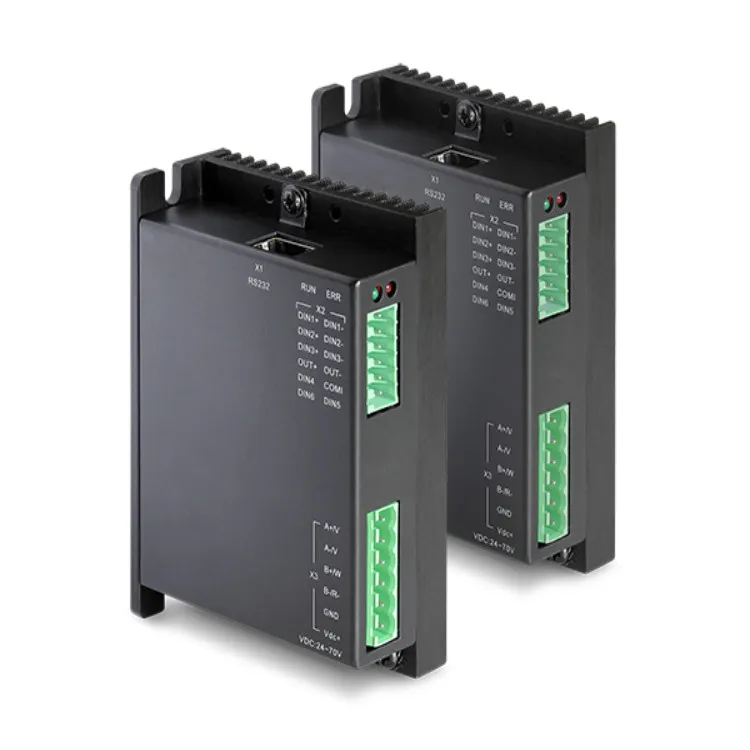
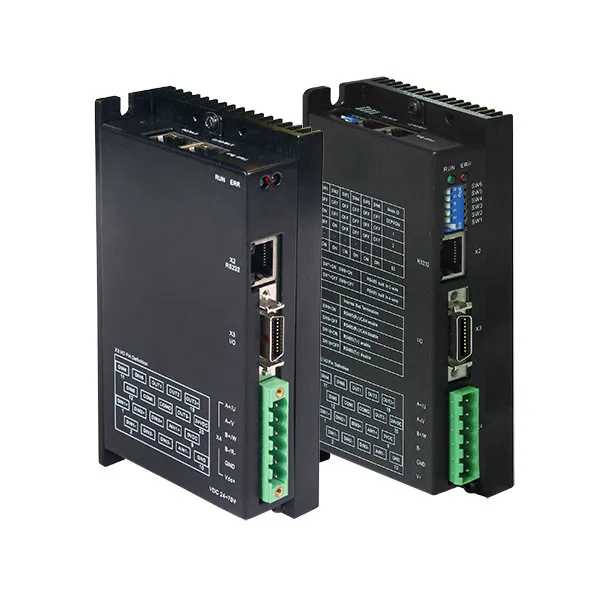
As a stepper system supplier, we understand the importance of sensor selection. We offer a wide range of 2 Phase Stepper Motor and 3 Phase Stepper Motor options, each compatible with different types of sensors. Our Field Bus Stepper Driver is also designed to work seamlessly with various sensors to provide a reliable and efficient closed - loop stepper system.
Conclusion
In conclusion, sensors are the backbone of a closed - loop stepper system. They provide the necessary feedback to the controller, allowing it to adjust the motor's operation in real - time and ensure accurate and reliable performance. Encoders, Hall effect sensors, current sensors, and temperature sensors each play a unique role in the system, and the proper selection and integration of these sensors are essential for the success of any application.
If you are in the market for a high - quality closed - loop stepper system, we invite you to contact us for a detailed discussion. Our team of experts can help you select the right sensors and components based on your specific requirements. Whether you are working on a small - scale project or a large - scale industrial application, we have the solutions to meet your needs. Let's work together to achieve the best performance for your motion control system.
References
- "Motion Control Handbook", Second Edition, Peter C. Sen.
- "Stepper Motor Systems: A Guide to the Application and Operation of Stepper Motors", I. J. N. Howarth.
- Technical documents from various sensor and stepper motor manufacturers.