
Hey there! I'm an industrial VFD (Variable Frequency Drive) supplier, and today I want to chat about how an industrial VFD handles motor starting current. It's a topic that's super important in the industrial world, and understanding it can save you a whole lot of headaches and money in the long run.
Let's start with the basics. When a motor starts up, it draws a huge amount of current, way more than it does when it's running at a steady state. This high starting current, also known as inrush current, can cause all sorts of problems. It can trip circuit breakers, damage electrical components, and even lead to voltage sags in the power supply system. Not to mention, it puts a lot of stress on the motor itself, which can shorten its lifespan.
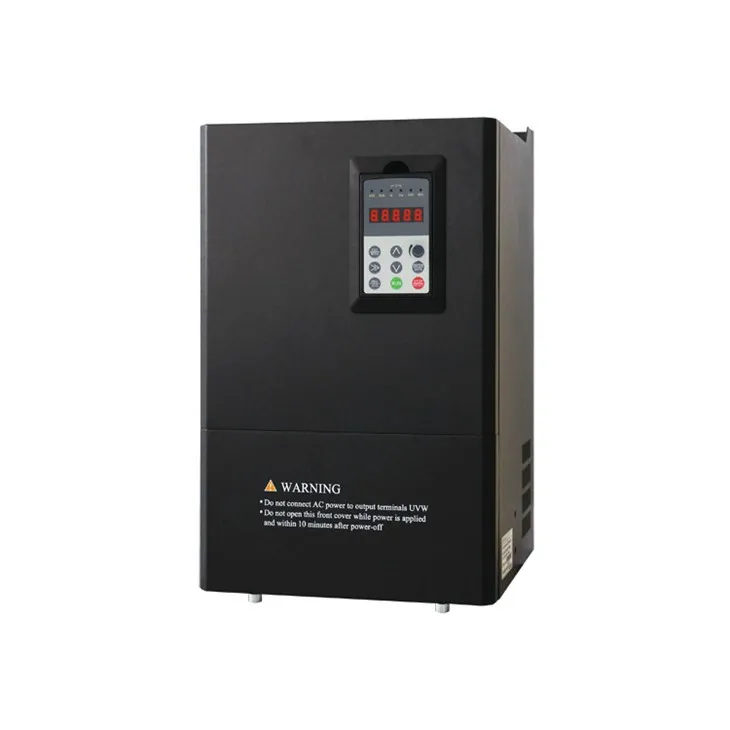
So, how does an industrial VFD come to the rescue? Well, a VFD is like a smart controller for your motor. It can vary the frequency and voltage supplied to the motor, which allows it to control the motor's speed and torque. When it comes to starting the motor, the VFD takes a more gentle approach.
Instead of applying full voltage and frequency right away, the VFD gradually ramps up the voltage and frequency. This is called soft starting. By starting the motor slowly, the VFD limits the inrush current. It gives the motor time to build up its speed and torque gradually, just like when you're gently pressing the accelerator in your car. This way, the current draw is kept under control, and you avoid all those pesky problems associated with high starting current.
Let's take a closer look at how this process works. When you turn on the VFD, it starts at a low frequency, usually around 0 Hz. At this frequency, the motor doesn't rotate at all. Then, the VFD gradually increases the frequency, and as it does, the motor starts to turn. The rate at which the frequency increases is called the acceleration time, and it can be adjusted on the VFD.
During the acceleration process, the VFD also adjusts the voltage to keep the motor's magnetic field at an optimal level. This ensures that the motor runs smoothly and efficiently. By the time the VFD reaches the desired operating frequency, the motor is up to speed, and the current draw has stabilized.
Another way that an industrial VFD handles motor starting current is through current limiting. Most VFDs have a built - in current limit function. You can set a maximum current value on the VFD, and it will make sure that the motor never draws more current than that value.
For example, if you set the current limit to 150% of the motor's rated current, the VFD will monitor the current draw during startup. If the current tries to exceed 150%, the VFD will slow down the acceleration process or reduce the voltage to keep the current within the limit. This is a great safety feature that protects both the motor and the electrical system.
Now, let's talk about some real - world applications. In the water pumping industry, a Water Pump Inverter is a type of industrial VFD that's specifically designed for water pumps. When a water pump starts, the inrush current can be quite high, especially for large pumps. A water pump inverter uses soft starting and current limiting to start the pump smoothly, reducing the stress on the pump motor and the power supply system.
In the ozone generation industry, an Ozone Generator Power Supply also benefits from the VFD's ability to handle starting current. Ozone generators often have motors that need to start and stop frequently. The VFD ensures that each start is gentle, preventing damage to the motor and other components.
And for solar - powered applications, a Solar Pump Inverter is crucial. Solar power systems have limited power output, and high starting current can cause the system to trip or underperform. A solar pump inverter manages the starting current effectively, allowing the pump to start and run efficiently using solar energy.
One of the great things about industrial VFDs is their flexibility. You can customize the starting parameters to suit the specific requirements of your motor and application. Whether you need a fast start for a high - performance motor or a very gentle start for a sensitive load, the VFD can be adjusted accordingly.
You can also use different starting methods depending on the situation. For example, some VFDs offer a constant torque start, which is suitable for applications where the load requires a lot of torque right from the start, like conveyor belts. Others offer a variable torque start, which is better for applications where the load torque increases with speed, like centrifugal pumps.
In addition to handling starting current, industrial VFDs also offer other benefits. They can improve energy efficiency by adjusting the motor speed to match the load. This means that the motor only uses as much power as it needs, which can result in significant energy savings over time.
They also provide better control over the motor's speed and torque, which can improve the overall performance of the system. For example, in a manufacturing process, a VFD - controlled motor can ensure that the machinery operates at the exact speed required for each step of the process, resulting in higher quality products.
If you're in the market for an industrial VFD, there are a few things to consider. First, make sure to choose a VFD that's rated for the power and voltage of your motor. You also want to look for a VFD with good current limiting and soft - starting capabilities.
It's also a good idea to choose a VFD from a reputable manufacturer. A reliable VFD will have better quality components and more advanced features, which will ensure that it performs well and lasts a long time.
If you have any questions about how an industrial VFD can handle motor starting current or which VFD is right for your application, don't hesitate to reach out. We're here to help you make the best choice for your business. Whether you're dealing with water pumps, ozone generators, or solar - powered systems, we've got the expertise and the products to meet your needs.
So, if you're interested in learning more or want to start a procurement discussion, just drop us a line. We'll be happy to provide you with more information, offer a quote, or even arrange a demonstration. Let's work together to find the perfect industrial VFD solution for your motor starting current challenges.
References
- “Variable Frequency Drives: Selection, Application, and Troubleshooting” by Dan Hebert
- “Electric Motors and Drives: Fundamentals, Types, and Applications” by Austin Hughes