
Hey there! As a supplier of general PLCs, I'm super stoked to chat with you about the network capabilities of these awesome devices. PLCs, or Programmable Logic Controllers, are like the brains behind a lot of industrial automation processes. They're used in all sorts of industries, from manufacturing to energy, and their network capabilities play a huge role in how they function.
First off, let's talk about why network capabilities are so important for PLCs. In today's connected world, it's crucial for PLCs to be able to communicate with other devices and systems. This allows for real - time data sharing, remote monitoring, and control. Whether it's sending data to a central control room or receiving commands from a higher - level system, a PLC's network capabilities are what make it an integral part of a larger automation ecosystem.
One of the most common network interfaces you'll find in general PLCs is Ethernet. Ethernet is a widely used networking technology that offers high - speed data transfer and is relatively easy to set up. With Ethernet, a PLC can connect to a local area network (LAN) or even the internet. This enables seamless communication with other PLCs, human - machine interfaces (HMIs), and servers. For example, you can use Ethernet to transfer production data from a PLC on the factory floor to a database server for analysis. This data can then be used to optimize production processes, identify bottlenecks, and improve overall efficiency.
Another important network capability is the support for industrial protocols. There are several industrial protocols out there, each with its own features and applications. One of the well - known protocols is Modbus. Modbus is a simple and robust protocol that's commonly used for communication between PLCs and other devices. It allows for easy read and write operations of data registers, making it ideal for applications where basic data exchange is required. For instance, you can use Modbus to connect a PLC to a temperature sensor and read the temperature data.
Now, let's take a look at some of the specific types of PLCs we offer and their unique network capabilities.
CAN Bus PLC
We have a great CAN Bus PLC in our product lineup. CAN, or Controller Area Network, is a serial communication protocol that's widely used in automotive and industrial applications. Our CAN Bus PLC is designed to take full advantage of the CAN protocol's features.
CAN is known for its high - reliability and multi - master capabilities. This means that multiple devices can communicate on the same CAN bus without the need for a central controller. In an industrial setting, this can be extremely useful. For example, you can have several CAN Bus PLCs on the same production line, each controlling a different part of the process. These PLCs can communicate with each other in real - time, coordinating their actions to ensure smooth operation.
The CAN Bus PLC also supports a high data transfer rate, which is essential for applications where large amounts of data need to be transmitted quickly. Whether it's sensor data or control commands, our CAN Bus PLC can handle it all.
Compact Mini PLC
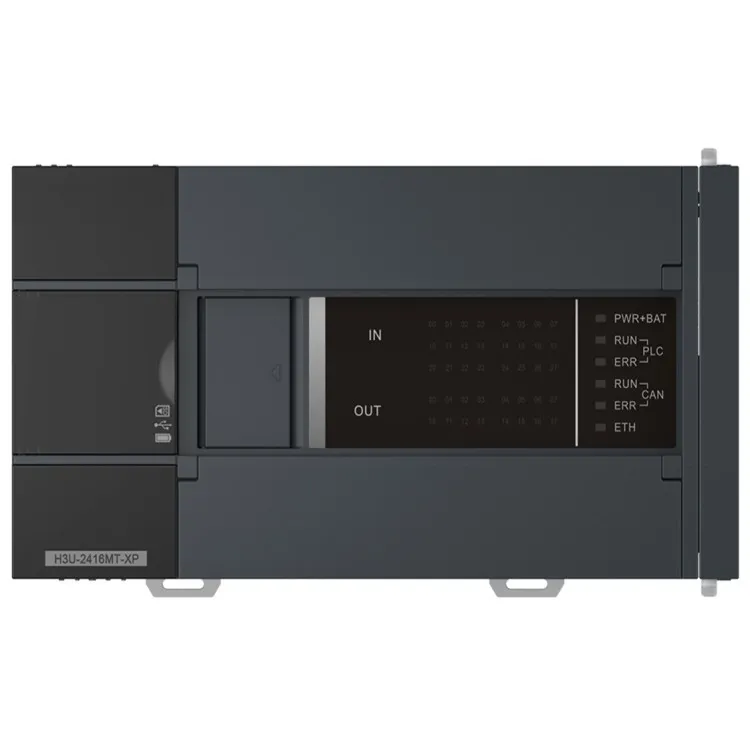
Our Compact Mini PLC is a great option for applications where space is limited. Despite its small size, it packs a powerful punch when it comes to network capabilities.
This PLC supports multiple network interfaces, including Ethernet and RS - 485. The Ethernet interface allows for easy integration into existing LANs, enabling remote access and monitoring. You can use a web browser to access the PLC's configuration settings and view real - time data, all from the comfort of your office.
The RS - 485 interface is useful for communicating with other devices over a long distance. It's a popular choice for applications where devices are spread out across a large area, such as in a large factory or a power plant. The Compact Mini PLC can communicate with other RS - 485 devices, such as sensors and actuators, to control and monitor various processes.
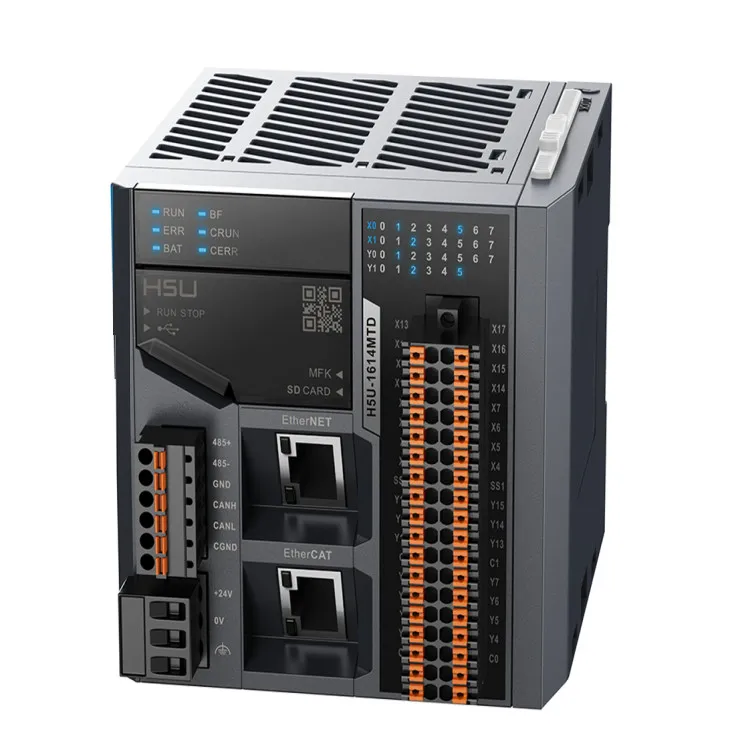
EtherCAT Bus PLC
The EtherCAT Bus PLC is another gem in our product range. EtherCAT, or Ethernet for Control Automation Technology, is a high - performance industrial Ethernet protocol.
EtherCAT offers extremely fast data transfer speeds and low latency, making it ideal for applications that require real - time control. In a manufacturing environment, this can mean precise control of robotic arms, conveyor belts, and other automated equipment. The EtherCAT Bus PLC can communicate with EtherCAT slaves in a matter of microseconds, ensuring that control commands are executed immediately.
It also supports distributed clock synchronization, which is crucial for applications where multiple devices need to operate in sync. For example, in a synchronized production line, all the PLCs and other devices need to have the same time reference to ensure accurate operation. Our EtherCAT Bus PLC can handle this synchronization with ease, making it a top choice for high - precision applications.
In addition to these specific network capabilities, our general PLCs also support security features. In today's digital age, security is of utmost importance. We've built in features like access control, encryption, and firewall protection to ensure that your PLCs and the data they handle are safe from unauthorized access. For example, you can set up user accounts with different levels of access rights, so only authorized personnel can make changes to the PLC's configuration.
So, if you're in the market for a general PLC with excellent network capabilities, look no further. Our PLCs are designed to meet the diverse needs of modern industrial automation. Whether you need a PLC for a small - scale project or a large - scale manufacturing facility, we've got you covered.
If you're interested in learning more about our products or have any questions regarding the network capabilities of our PLCs, don't hesitate to reach out. We're here to help you find the perfect PLC solution for your application. Let's have a chat and see how we can work together to take your automation processes to the next level.
References
- Industrial Networking Handbook: Principles and Applications by David A. Bell
- Programmable Logic Controllers: Principles and Applications by David A. Bell
- CAN in Automation (CiA) Specifications
- EtherCAT Technology Group Documentation