
Hey there! As a supplier of stepper systems, I've gotten tons of questions from customers about how the torque of a stepper system changes with speed. It's a super important topic, especially for those who are looking to use stepper systems in their projects. So, I thought I'd take the time to break it down and share what I know.
Let's start with the basics. A stepper system is made up of a stepper motor and a driver. The motor converts electrical pulses into discrete mechanical movements, and the driver controls the electrical signals sent to the motor. The torque of a stepper system is the rotational force that the motor can produce, and it's a crucial factor in determining the system's performance.
Now, how does torque change with speed? Well, it's not a simple linear relationship. In general, as the speed of a stepper motor increases, the torque it can produce decreases. This is due to a few different factors.
First off, there's the electrical time constant of the motor. The windings in a stepper motor have inductance, which means that when you change the current flowing through them, there's a delay before the magnetic field in the motor fully responds. At low speeds, this isn't a big deal because the electrical signals from the driver have plenty of time to let the magnetic field build up and generate torque. But as the speed increases, the time between electrical pulses gets shorter, and the magnetic field doesn't have enough time to reach its full strength. This results in a decrease in torque.
Another factor is the back EMF (electromotive force). When the motor rotates, the magnetic field in the windings cuts across the conductors, generating a voltage that opposes the applied voltage from the driver. This back EMF increases with speed. As the back EMF gets stronger, it reduces the effective voltage across the motor windings, which in turn reduces the current flowing through them. Since torque is proportional to current in a stepper motor, a decrease in current means a decrease in torque.
Let's take a closer look at the torque - speed curve of a stepper motor. The curve typically has three regions: the holding torque region, the pull - in torque region, and the pull - out torque region.
The holding torque is the maximum torque the motor can produce when it's stationary and energized. This is the highest torque value for the motor. In the holding torque region, the motor is essentially just sitting there, waiting for a command to move. As you start to increase the speed, you enter the pull - in torque region. The pull - in torque is the maximum torque at which the motor can start and stop without losing steps. In this region, the motor can accelerate and decelerate smoothly, but as the speed keeps going up, the pull - in torque decreases.
Once you go beyond the pull - in torque region, you enter the pull - out torque region. The pull - out torque is the maximum torque the motor can produce while running at a constant speed without losing steps. This torque also decreases as the speed increases. If you try to load the motor with a torque greater than the pull - out torque at a given speed, the motor will start to lose steps, which can lead to inaccurate positioning.
Now, different types of stepper motors have different torque - speed characteristics. For example, a 2 Phase Stepper Motor is one of the most common types. It usually has a relatively simple construction and is cost - effective. However, its torque - speed curve may not be as flat as some other types of motors, meaning that the torque drops off more rapidly with increasing speed.
On the other hand, a 3 Phase Stepper Motor can offer better performance in terms of torque at higher speeds. The additional phase allows for a more complex magnetic field pattern, which can help maintain torque as the speed increases.
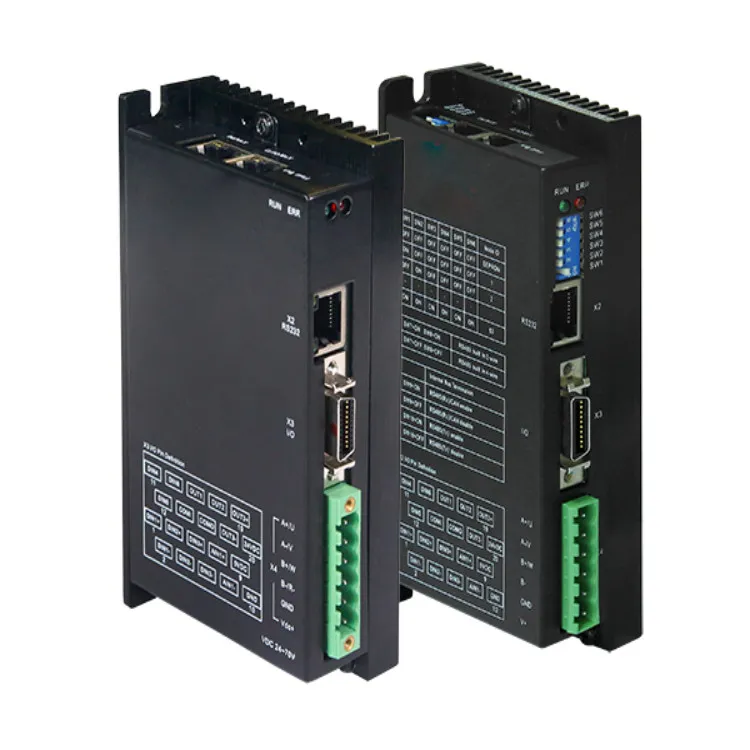
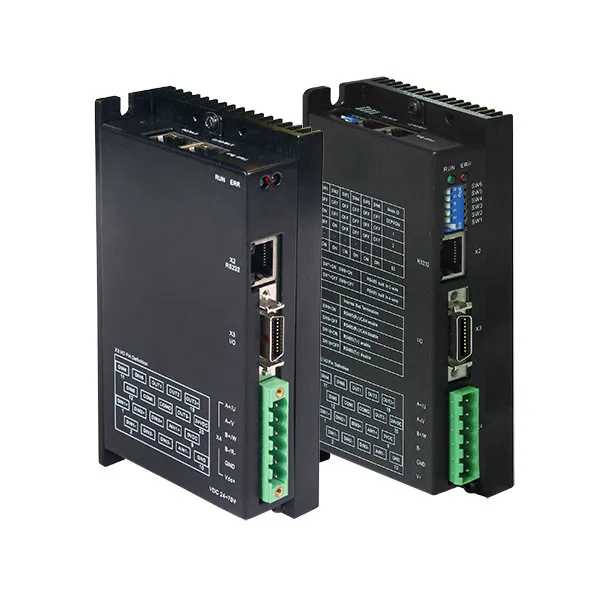
The driver also plays a big role in how the torque changes with speed. A high - quality Field Bus Stepper Driver can compensate for some of the effects that cause torque to decrease at high speeds. For example, some drivers use advanced control algorithms to adjust the current and voltage supplied to the motor based on the speed. This can help keep the magnetic field in the motor closer to its optimal strength, resulting in better torque performance across a wider speed range.
So, why does all this matter? Well, if you're using a stepper system in an application, understanding how torque changes with speed is crucial for proper system design. For example, if you're building a 3D printer, you need to make sure that the stepper motors can provide enough torque at the required speeds to move the print head and the build platform accurately. If you choose a motor that doesn't have enough torque at the operating speed, you'll end up with a printer that produces low - quality prints or even fails to work properly.
Similarly, in a CNC machine, the stepper motors are responsible for moving the cutting tools with high precision. If the torque drops too much at the operating speed, the machine may not be able to cut materials accurately, leading to wasted materials and poor - quality products.
As a supplier of stepper systems, I always recommend that customers carefully consider their application requirements when choosing a motor and a driver. Look at the speed range you need, the load torque, and the accuracy requirements. If you're not sure, don't hesitate to reach out to us. We've got a team of experts who can help you select the right stepper system for your project.
Whether you're working on a small DIY project or a large - scale industrial application, getting the torque - speed relationship right is essential for the success of your stepper system. We offer a wide range of 2 Phase Stepper Motor, 3 Phase Stepper Motor, and Field Bus Stepper Driver to meet different needs.
If you're interested in learning more about our stepper systems or have any questions about torque - speed characteristics, feel free to contact us. We're here to help you make the best choice for your project.
References:
- "Stepper Motor Handbook" by Walter J. Y. Wong
- "Motion Control Basics" published by the International Society of Automation