

In the realm of industrial automation, Programmable Logic Controllers (PLCs) play a pivotal role in controlling and monitoring various processes. Among the different communication buses used in PLC networks, the Controller Area Network (CAN) Bus has gained significant popularity due to its robustness, reliability, and cost - effectiveness. However, with the increasing connectivity and integration of industrial systems, the security of CAN Bus in a PLC network has become a critical concern. As a CAN Bus PLC supplier, I am well - versed in the importance of implementing proper security measures to safeguard these systems.
Understanding the CAN Bus in PLC Networks
The CAN Bus is a serial communication protocol designed for real - time applications. It allows multiple nodes (such as sensors, actuators, and PLCs) to communicate with each other over a single two - wire bus. In a PLC network, the CAN Bus enables the exchange of data between different devices, facilitating coordinated control and monitoring. For instance, in a manufacturing plant, CAN Bus - connected PLCs can communicate with various machines on the production line to ensure smooth operation.
One of the key advantages of the CAN Bus is its high - speed data transmission and error - detection capabilities. It uses a non - destructive bit - wise arbitration mechanism, which means that in case of a collision between messages on the bus, the message with the higher priority will be transmitted first without data loss. This makes it suitable for applications where real - time data transfer is crucial.
Security Threats to CAN Bus in PLC Networks
Despite its many advantages, the CAN Bus in a PLC network is not immune to security threats. One of the primary threats is unauthorized access. Hackers can gain access to the CAN Bus network through various means, such as exploiting vulnerabilities in the communication protocol or through physical access to the network. Once they gain access, they can inject false messages into the bus, which can disrupt the normal operation of the PLC network.
Another significant threat is data integrity. Since the CAN Bus does not have built - in encryption mechanisms, the data transmitted over the bus can be intercepted and modified. For example, in a vehicle's CAN Bus network (which is similar to an industrial PLC network in terms of communication), a hacker could modify the data related to the speed or braking system, leading to potentially dangerous situations.
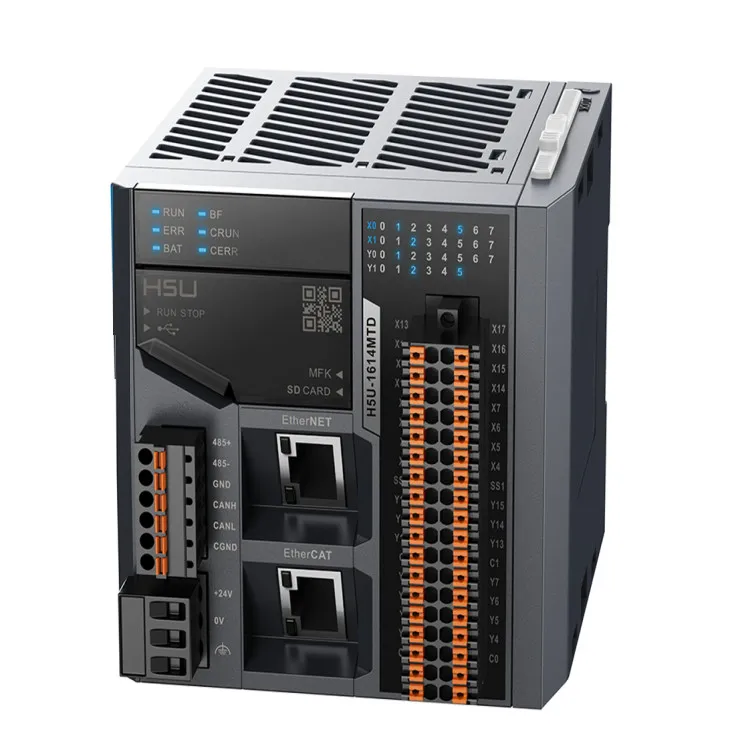
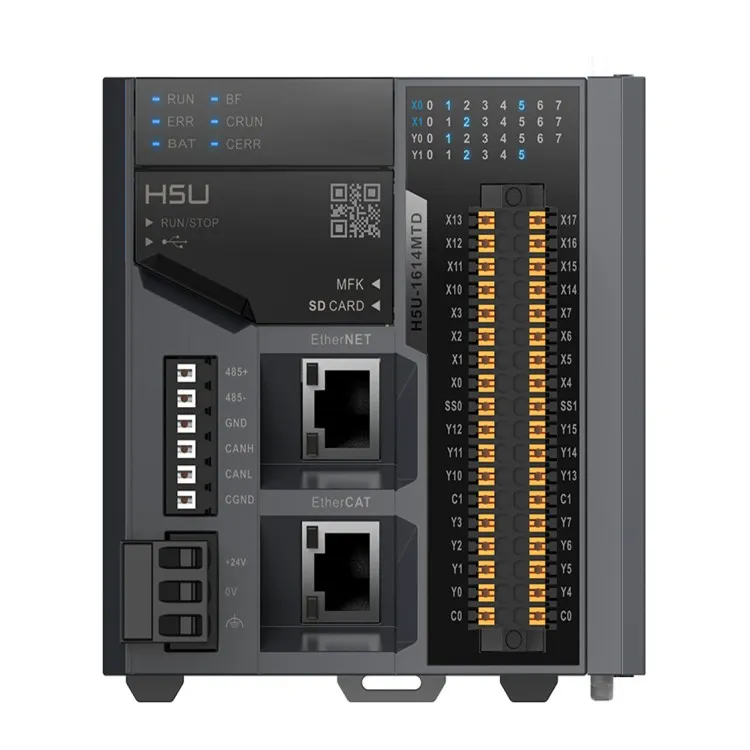
Denial - of - service (DoS) attacks are also a concern. Attackers can flood the CAN Bus with a large number of messages, overwhelming the network and preventing legitimate messages from being transmitted. This can cause the PLC network to malfunction or even shut down completely.
Security Measures for CAN Bus in PLC Networks
Physical Security
Physical security is the first line of defense for a CAN Bus in a PLC network. As a CAN Bus PLC supplier, I always recommend that our customers secure the physical infrastructure of their networks. This includes installing the PLCs and related devices in locked cabinets or rooms with restricted access. Only authorized personnel should be allowed to access the equipment.
Additionally, proper cable management is essential. The CAN Bus cables should be protected from physical damage, such as cuts or abrasions, which could lead to signal interference or data loss. Shielded cables can be used to reduce electromagnetic interference and prevent eavesdropping.
Authentication and Authorization
Implementing authentication and authorization mechanisms is crucial to prevent unauthorized access to the CAN Bus network. One way to do this is through the use of passwords or digital certificates. Each device on the network should have a unique identifier and a password or certificate that must be verified before it can communicate on the bus.
For example, a PLC could be configured to only accept messages from devices that have been pre - registered and authenticated. This can be achieved through a central authentication server that manages the access rights of all devices on the network.
Encryption
Encryption is an effective way to protect the data transmitted over the CAN Bus. Although the CAN Bus protocol itself does not support encryption, additional encryption modules can be added to the network. These modules can encrypt the data before it is transmitted on the bus and decrypt it at the receiving end.
There are different encryption algorithms available, such as Advanced Encryption Standard (AES), which is widely used due to its high level of security. By encrypting the data, even if an attacker intercepts the messages on the bus, they will not be able to understand the content without the decryption key.
Intrusion Detection and Prevention Systems (IDPS)
Intrusion Detection and Prevention Systems can be used to monitor the CAN Bus network for any suspicious activity. These systems can analyze the traffic on the bus and detect patterns that indicate an attack, such as a sudden increase in the number of messages or the presence of unauthorized messages.
Once an intrusion is detected, the IDPS can take preventive actions, such as blocking the source of the attack or alerting the system administrator. There are both hardware - based and software - based IDPS available, and the choice depends on the specific requirements of the PLC network.
Network Segmentation
Network segmentation is another important security measure. By dividing the CAN Bus network into smaller segments, the impact of a security breach can be limited. For example, different departments in a manufacturing plant can have their own segmented CAN Bus networks. This way, if an attack occurs in one segment, it will not spread to other segments of the network.
Each segment can have its own security policies and access controls, which can be tailored to the specific needs of the devices and applications within that segment.
Comparison with Other Bus Systems
When considering the security of CAN Bus in a PLC network, it is also important to compare it with other bus systems, such as the 485 Pulse Bus and the EtherCAT Bus.
The 485 Pulse PLC is a popular choice for industrial applications due to its simplicity and low cost. However, it has some limitations in terms of security. The 485 Pulse Bus is more susceptible to electromagnetic interference, and it does not have the same level of error - detection and arbitration mechanisms as the CAN Bus.
On the other hand, the EtherCAT Bus PLC offers high - speed communication and is suitable for applications that require real - time data transfer. It has better security features compared to the 485 Pulse Bus, such as the ability to use standard Ethernet security protocols. However, the CAN Bus still has its advantages, especially in terms of its robustness and cost - effectiveness.
The CAN Bus PLC provides a good balance between security, performance, and cost. With the implementation of proper security measures, it can be a reliable choice for industrial automation applications.
Conclusion and Call to Action
In conclusion, the security of CAN Bus in a PLC network is of utmost importance in today's connected industrial environment. As a CAN Bus PLC supplier, I am committed to providing our customers with the best - in - class products and solutions to ensure the security of their networks.
We understand that each PLC network is unique, and we can work with you to develop a customized security plan that meets your specific requirements. Whether you need assistance with physical security, authentication, encryption, or intrusion detection, our team of experts is here to help.
If you are interested in learning more about our CAN Bus PLC products and the security measures we offer, or if you are looking to start a procurement discussion, please do not hesitate to reach out. We are eager to engage in a productive conversation and help you build a secure and efficient PLC network.
References
- Maxwell, T. (2019). Industrial Automation Security: Protecting the CAN Bus in PLC Networks. Industrial Security Journal.
- Smith, R. (2020). CAN Bus Security: Challenges and Solutions in PLC Applications. Automation Technology Review.
- Johnson, A. (2021). A Comparative Analysis of Bus Systems in PLC Networks: CAN Bus, 485 Pulse Bus, and EtherCAT Bus. Industrial Communication Research.