
Hey there! I'm working as a supplier of CAN Bus PLC, and I've been getting a lot of questions lately about how temperature affects the CAN Bus in a PLC system. So, I thought I'd write this blog to share some insights on this topic.
First off, let's quickly understand what a CAN Bus in a PLC system is. CAN, which stands for Controller Area Network, is a robust vehicle bus standard designed to allow microcontrollers and devices to communicate with each other in applications without a host computer. In a PLC (Programmable Logic Controller) system, the CAN Bus plays a crucial role in data transmission between different components.
Now, let's dive into how temperature can mess with the CAN Bus in a PLC system. Temperature can have both direct and indirect impacts on the performance and reliability of the CAN Bus.
Direct Impact of Temperature
Signal Integrity
One of the most significant direct impacts of temperature is on signal integrity. As the temperature rises, the electrical properties of the conductors in the CAN Bus cables change. Resistance increases with temperature according to the well - known formula (R = R_0(1+\alpha\Delta T)), where (R) is the resistance at temperature (T), (R_0) is the resistance at a reference temperature, (\alpha) is the temperature coefficient of resistance, and (\Delta T) is the change in temperature.
Higher resistance means more voltage drop along the cable. This can lead to a reduction in the signal amplitude. If the signal amplitude drops below a certain threshold, the receiving end might not be able to accurately detect the signal. For example, in a high - temperature industrial environment where the CAN Bus cables are exposed to heat sources, the increased resistance can cause bit errors in the data transmission. This is a big deal because bit errors can lead to incorrect data being processed by the PLC, which can result in faulty control actions.
Component Performance
The electronic components in the CAN Bus transceiver are also highly sensitive to temperature. Transistors, capacitors, and resistors all have temperature - dependent characteristics. For instance, the gain of a transistor can change with temperature. A decrease in transistor gain can reduce the output power of the transceiver, making it harder for the signal to travel long distances on the CAN Bus.
Capacitors can also be affected. Their capacitance value can change with temperature, which can alter the frequency response of the CAN Bus circuit. This can cause issues such as signal distortion or even complete signal loss in extreme cases. In a PLC system, where precise timing and accurate signal reception are crucial, any change in component performance due to temperature can disrupt the entire communication process.
Indirect Impact of Temperature
Environmental Stress
High temperatures can also lead to other environmental stresses that indirectly affect the CAN Bus. For example, in a hot environment, there might be an increase in humidity. Moisture can corrode the metal contacts in the connectors of the CAN Bus. Corroded contacts increase the contact resistance, which further exacerbates the signal integrity problems we discussed earlier.
Moreover, high temperatures can cause mechanical stress on the cables and components. Expansion and contraction of materials due to temperature changes can lead to physical damage such as cable cracking or component loosening. This can disrupt the electrical connections in the CAN Bus and cause intermittent or complete loss of communication.
Cooling System Load
In a PLC system, if the temperature is too high, the cooling system has to work harder to maintain an acceptable operating temperature for the components. This increased load on the cooling system can lead to higher energy consumption and potentially shorter lifespan of the cooling components. If the cooling system fails due to the excessive load, the temperature of the CAN Bus components will rise even further, creating a vicious cycle that can ultimately lead to system failure.
Dealing with Temperature Challenges
Temperature - Resistant Components
One way to mitigate the impact of temperature on the CAN Bus in a PLC system is to use temperature - resistant components. For example, some CAN Bus transceivers are designed to operate over a wide temperature range. These transceivers are built with materials and manufacturing processes that can withstand high temperatures without significant degradation in performance.
Thermal Management
Proper thermal management is also crucial. This can include using heat sinks, fans, or even liquid cooling systems to keep the temperature of the CAN Bus components within an acceptable range. Heat sinks can dissipate heat from the components, while fans can circulate air to remove the heat. Liquid cooling systems are more efficient but also more complex and expensive.
Cable Selection
Choosing the right cables is another important factor. Some cables are designed to have lower temperature coefficients of resistance, which means their electrical properties change less with temperature. These cables can help maintain better signal integrity in high - temperature environments.
Our CAN Bus PLC Offerings
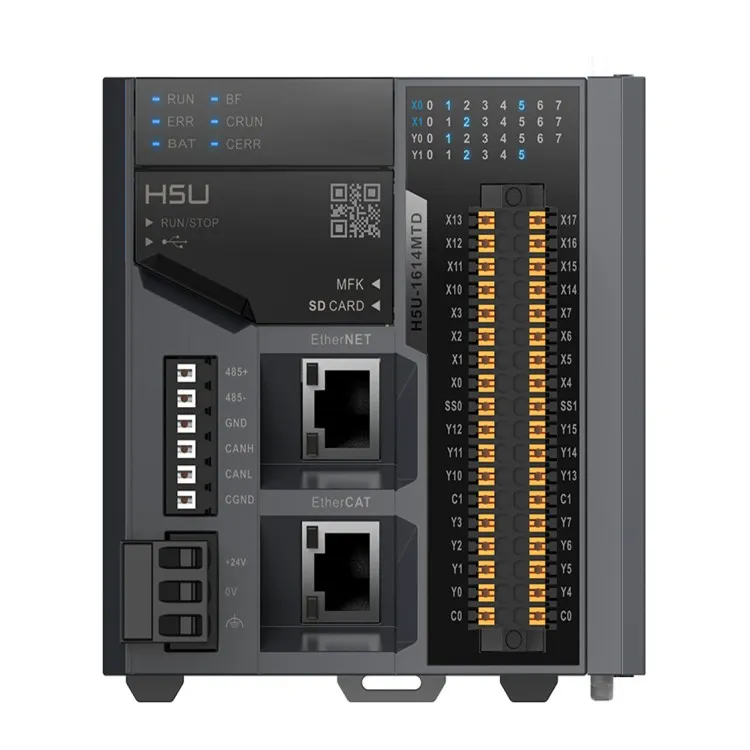
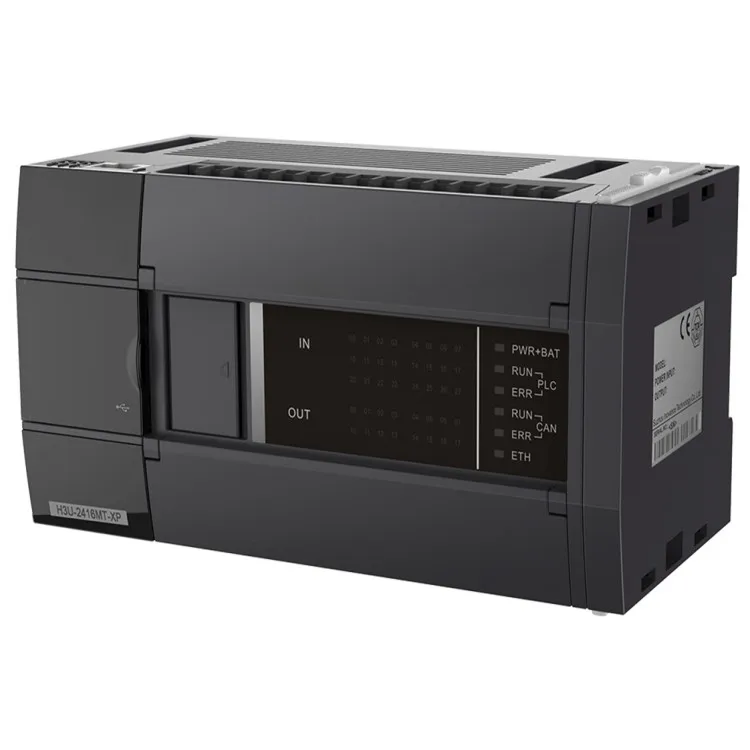
At our company, we understand the challenges that temperature can pose to the CAN Bus in a PLC system. That's why our CAN Bus PLC products are designed with these factors in mind. We use high - quality, temperature - resistant components in our CAN Bus transceivers to ensure reliable performance even in harsh temperature conditions.
Our PLCs also come with advanced thermal management features. For example, we have built - in fans and heat sinks that are optimized to keep the components cool. And we use cables with low temperature coefficients of resistance to minimize signal degradation due to temperature changes.
In addition to our CAN Bus PLC, we also offer 485 Pulse PLC and EtherCAT Bus PLC products. Each of these has its own advantages and is suitable for different applications.
If you're facing temperature - related issues with your current CAN Bus PLC system or if you're looking for a reliable solution for a new project, we'd love to talk to you. Our team of experts can help you choose the right product and provide you with the support you need to ensure smooth operation of your PLC system. So, don't hesitate to reach out to us for a procurement discussion. We're here to help you make the best decision for your business.
References
- "CAN Bus Basics" by Robert Bosch GmbH
- "Temperature Effects on Electronic Components" by IEEE Transactions on Components, Hybrids, and Manufacturing Technology
- "Industrial PLC Systems: Design and Implementation" by John Wiley & Sons