
In the world of motion control, stepper systems play a pivotal role. As a supplier of stepper systems, I often get asked about various technical aspects, and one question that frequently comes up is: "What is the response time of a stepper system?" In this blog, I'll delve into this topic, exploring what response time means in the context of stepper systems, the factors that influence it, and why it matters for different applications.
Understanding Response Time in Stepper Systems
Response time in a stepper system refers to the time it takes for the system to react to a control input and reach a desired position or state. It's a crucial parameter that can significantly impact the performance of any application relying on precise motion control. When a pulse is sent to a stepper motor driver, the motor needs to start moving, accelerate to the desired speed, and then stop at the correct position. The time elapsed from the moment the input is given until the motor reaches the target position is the response time.
There are several key components within a stepper system that contribute to its overall response time. These include the stepper motor itself, the driver, and the control mechanism. Each of these elements has its own characteristics that can either enhance or impede the system's ability to respond quickly.
The Role of the Stepper Motor
The stepper motor is the heart of the system, responsible for converting electrical pulses into mechanical motion. Different types of stepper motors have varying response times. For example, a 2 Phase Stepper Motor is a popular choice due to its simplicity and cost - effectiveness. It typically has a relatively fast response time, as it can quickly change its magnetic field to move to the next step.
The design of the motor, including its winding configuration, number of poles, and rotor inertia, also affects the response time. A motor with a lower rotor inertia can accelerate and decelerate more rapidly, resulting in a shorter response time. On the other hand, a motor with a high inertia may take longer to reach the desired speed and position.
Another factor is the step angle of the motor. Motors with smaller step angles can provide more precise motion but may require more pulses to move a given distance. This can potentially increase the response time, especially if the control system has limitations in generating a high - frequency pulse train.
The Impact of the Driver
The stepper motor driver is responsible for providing the appropriate electrical signals to the motor. It plays a crucial role in determining the response time of the system. A high - quality driver can deliver the right amount of current and voltage to the motor quickly, enabling it to respond rapidly to control inputs.
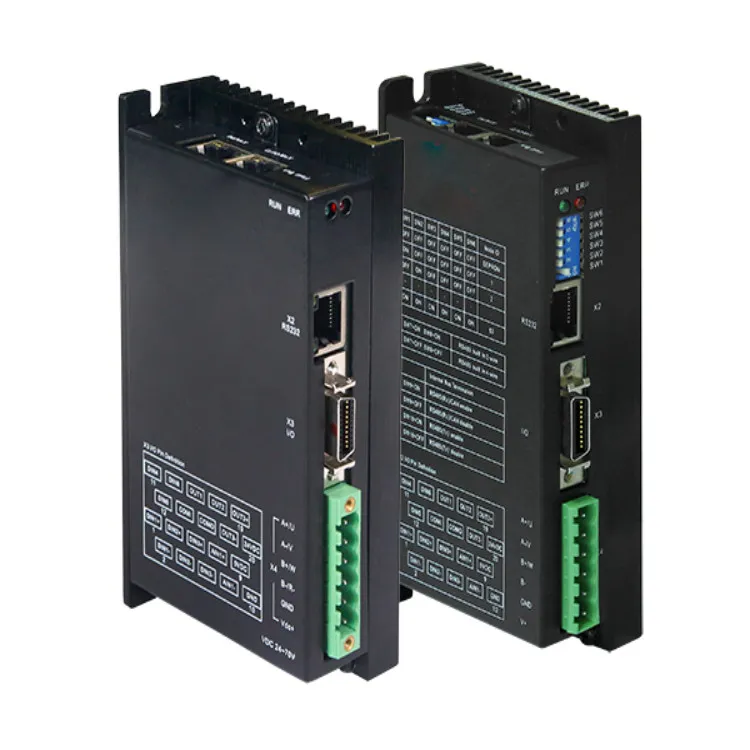
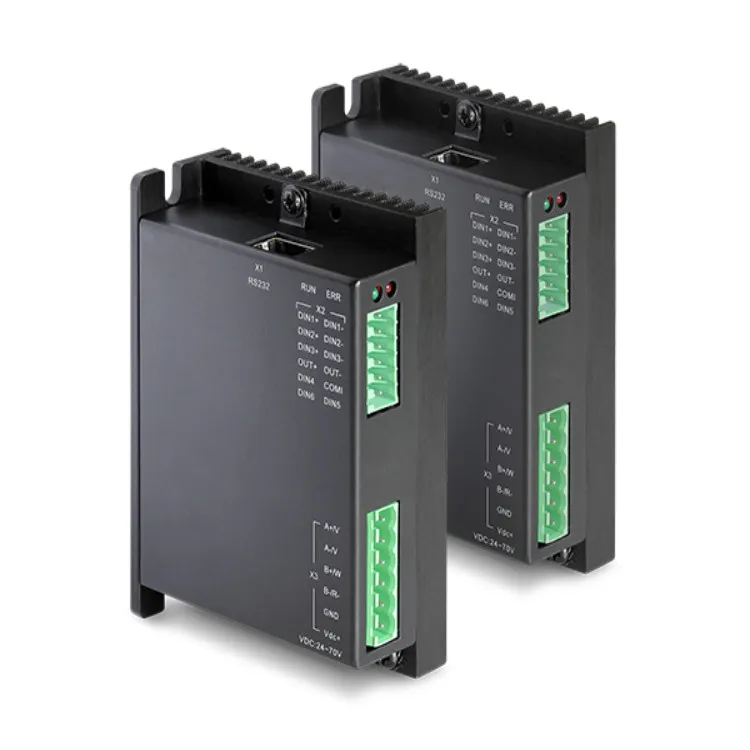
A Field Bus Stepper Driver offers several advantages in terms of response time. It allows for more advanced control algorithms and communication protocols, which can optimize the motor's performance. For example, it can adjust the current based on the motor's load and speed, ensuring efficient operation and faster response.
The driver's ability to handle high - frequency pulses is also important. If the driver can generate and send pulses at a high rate, the motor can move more quickly, reducing the response time. However, there are limitations to how fast a driver can operate, and these limitations need to be considered when designing a stepper system.
The Control Mechanism
The control mechanism is the brain of the stepper system, sending commands to the driver based on the desired motion profile. The type of control algorithm used can have a significant impact on the response time. For example, open - loop control systems are simpler and less expensive but may not provide the fastest response. In an open - loop system, the control mechanism sends a fixed number of pulses to the driver without feedback on the motor's actual position. This can lead to errors, especially if the load on the motor changes.
Closed - loop control systems, on the other hand, use sensors to provide feedback on the motor's position. This allows the control mechanism to adjust the pulses sent to the driver in real - time, ensuring more accurate and faster response. However, closed - loop systems are more complex and expensive.
Factors Affecting Response Time
In addition to the components of the stepper system, there are several external factors that can affect the response time. One of the most significant factors is the load on the motor. A heavy load can slow down the motor's acceleration and deceleration, increasing the response time. The type of load, whether it is inertial, frictional, or a combination of both, also matters.
The operating environment can also have an impact. High temperatures can cause the motor and driver to overheat, reducing their performance and increasing the response time. Similarly, vibrations and mechanical shocks can disrupt the motor's operation and lead to longer response times.
Importance of Response Time in Different Applications
The response time of a stepper system is crucial in many applications. In robotics, for example, fast response times are essential for precise movement and interaction with the environment. A robot arm needs to be able to quickly adjust its position to perform tasks such as picking and placing objects.
In CNC (Computer Numerical Control) machines, a short response time ensures accurate machining. The stepper system needs to respond rapidly to changes in the cutting path to produce high - quality parts.
In 3D printing, the response time affects the print quality. A fast - responding stepper system can move the print head more precisely, resulting in smoother surfaces and better - defined details.
Improving the Response Time of a Stepper System
As a supplier, I understand the importance of providing stepper systems with fast response times. There are several ways to improve the response time of a stepper system. Firstly, choosing the right components is crucial. Selecting a motor with a low inertia and a driver with high - speed capabilities can significantly reduce the response time.
Optimizing the control algorithm is also important. Using advanced control techniques, such as closed - loop control and adaptive control, can improve the system's ability to respond quickly to changes in the load and operating conditions.
Proper maintenance and calibration of the system can also help maintain a fast response time. Regularly checking the motor, driver, and control mechanism for any signs of wear or malfunction can prevent issues that could lead to longer response times.
Conclusion
In conclusion, the response time of a stepper system is a complex parameter that is influenced by multiple factors, including the motor, driver, control mechanism, load, and operating environment. Understanding these factors is essential for selecting the right stepper system for a particular application and for optimizing its performance.
As a supplier of stepper systems, I am committed to providing high - quality products with fast response times. Whether you need a 2 Phase Stepper Motor, a Field Bus Stepper Driver, or a 3 Phase Stepper Motor, I can offer solutions tailored to your specific needs.
If you have any questions about stepper systems or are interested in purchasing our products, I encourage you to contact me for a detailed discussion. We can work together to find the best stepper system solution for your application and ensure optimal performance.
References
- "Stepper Motor Handbook" by Peter C. Senft
- "Motion Control Basics" by Michael J. Zyda
- Technical papers from leading stepper motor and driver manufacturers