

Hey there! As an IO-Link supplier, I'm super stoked to talk about the role of IO-Link in building automation. It's a game-changer in the industry, and I'm gonna break it down for you.
First off, let's get a quick understanding of what IO-Link is. IO-Link is a standardized communication protocol (IEC 61131-9) that allows for point-to-point communication between sensors/actuators and the control system. It's like a bridge that connects the smart devices in your building to the brain of the operation.
Simplifying Device Integration
One of the biggest headaches in building automation is integrating different types of sensors and actuators. With traditional systems, each device might have its own unique wiring and communication requirements. This can lead to a real mess of cables and a lot of time spent on configuration.
IO-Link changes all that. It provides a single, standardized interface for connecting devices. Whether you're dealing with temperature sensors, motion detectors, or IO-Link Device Module, they can all be connected using the same IO-Link master. This simplifies the installation process and reduces the chances of errors.
For example, let's say you're installing a new security system in a building. You have multiple sensors, including door sensors, window sensors, and motion sensors. With IO-Link, you can connect all these sensors to an IO-Link master using a single cable. The master then communicates with the control system, making it easy to manage and monitor the security system.
Enabling Smart Device Functionality
IO-Link isn't just about making installation easier; it also unlocks the full potential of smart devices. Smart sensors and actuators have a lot of built-in intelligence, but without a proper communication protocol, this intelligence can't be fully utilized.
IO-Link allows for bidirectional communication between the device and the control system. This means that not only can the control system receive data from the device, but it can also send commands to the device. For instance, a smart temperature sensor can not only send the current temperature reading to the control system but can also receive commands to adjust its measurement range or sampling rate.
This level of control and flexibility is crucial in building automation. It allows for more precise control of building systems, which can lead to energy savings and improved comfort. For example, in a heating, ventilation, and air conditioning (HVAC) system, smart sensors can provide real-time data on temperature, humidity, and occupancy. The control system can then use this data to adjust the HVAC settings accordingly, ensuring that the building is always at the optimal temperature and humidity levels.
Improving System Diagnostics and Maintenance
Another important role of IO-Link in building automation is in system diagnostics and maintenance. Traditional systems can be difficult to troubleshoot because it's often hard to determine the exact cause of a problem.
With IO-Link, devices can provide detailed diagnostic information. For example, a sensor can report if it's experiencing a fault, such as a broken wire or a low battery. This information is sent directly to the control system, which can then alert the maintenance team.
This proactive approach to maintenance can save a lot of time and money. Instead of spending hours trying to find the source of a problem, maintenance teams can quickly identify and fix the issue. Additionally, IO-Link can also provide data on device performance over time, which can be used to predict when a device might need to be replaced.
Enhancing System Scalability
Building automation systems often need to be scalable to accommodate changes in the building's needs. Whether it's adding new sensors or expanding the system to cover a larger area, scalability is an important consideration.
IO-Link makes it easy to scale a building automation system. Since all devices are connected using a standardized interface, adding new devices is as simple as plugging them into the IO-Link master. The master can then automatically detect the new device and configure it accordingly.
For example, let's say you're adding a new floor to a building. You can easily install new sensors and actuators on the new floor and connect them to the existing IO-Link master. The control system will then be able to manage and monitor these new devices without any major reconfiguration.
Integration with Multi-protocol Networks
In today's building automation systems, it's common to have multiple communication protocols in use. This can be a challenge when it comes to integrating different devices and systems.
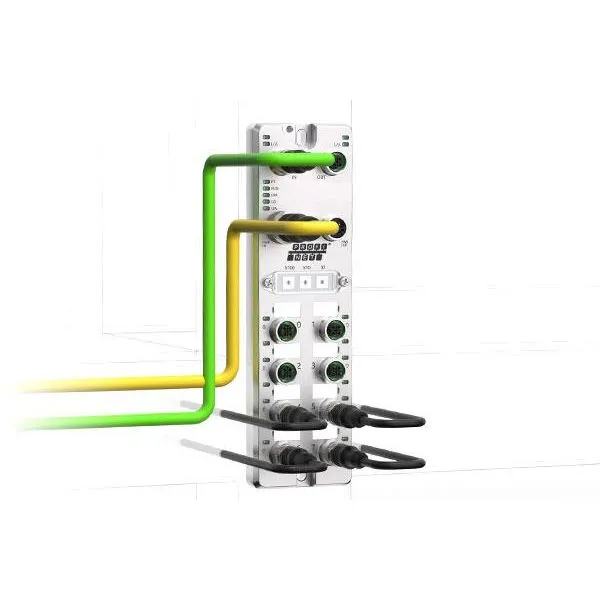
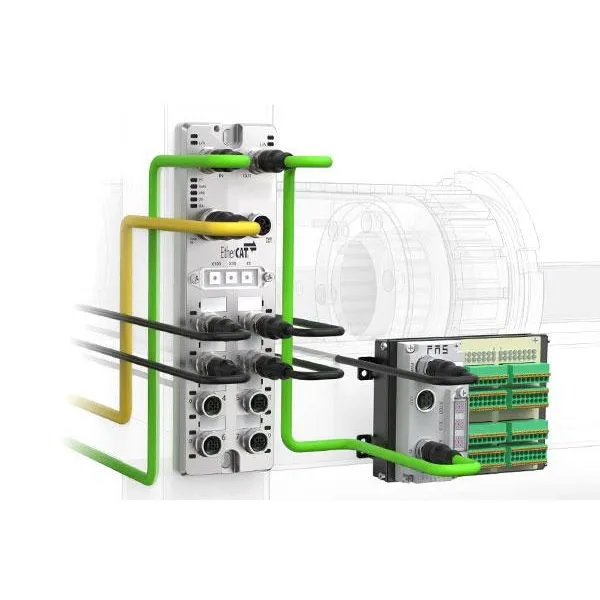
IO-Link can be integrated with Multi-protocol Network Module to communicate with other protocols. This allows for seamless integration between IO-Link devices and other systems, such as Ethernet/IP, Profibus, or Modbus.
For example, if you have an existing building automation system that uses Ethernet/IP, you can use a multi-protocol network module to connect IO-Link devices to the system. This ensures that all devices in the building can communicate with each other, regardless of the protocol they use.
Applications in Valve Islands
Valve islands are an important part of building automation systems, especially in HVAC and pneumatic systems. They are used to control the flow of air, water, or other fluids.
IO-Link plays a crucial role in valve islands. It allows for precise control of the valves, which can improve the efficiency of the system. With IO-Link, the control system can monitor the status of each valve, such as its open/closed position and the pressure it's experiencing.
For example, in a pneumatic system, IO-Link can be used to control the opening and closing of valves based on the pressure and flow requirements. This can lead to more efficient use of compressed air and reduced energy consumption. You can check out more about valve islands on our Valve Islands page.
Conclusion
In conclusion, IO-Link is a vital technology in building automation. It simplifies device integration, enables smart device functionality, improves system diagnostics and maintenance, enhances system scalability, and allows for integration with multi-protocol networks. It also plays an important role in valve islands, improving the efficiency of pneumatic and HVAC systems.
If you're in the market for building automation solutions and are interested in leveraging the benefits of IO-Link, I'd love to talk to you. Whether you're a building owner, a system integrator, or an engineer, we can work together to find the best IO-Link solutions for your needs. So, don't hesitate to reach out and let's start a conversation about how IO-Link can transform your building automation system.
References
- IEC 61131-9: Programmable controllers - Part 9: Specification for the communication profile for sensors and actuators (IO-Link)
- Various industry reports and whitepapers on building automation and IO-Link technology.