
Hey there! As an IO-Link supplier, I've had my fair share of chats with folks who are curious about the ins and outs of these nifty systems. Today, I wanna dig deep into the role of the IO-Link master in a system.
First off, let's get a quick lowdown on what IO-Link is. It's a communication protocol that's been making waves in the industrial automation scene. It allows for bi-directional communication between sensors, actuators, and a central control system. And that's where the IO-Link master comes in.
The IO-Link master is like the conductor of an orchestra. It's responsible for managing the communication between all the IO-Link devices in the system. It coordinates the data flow, making sure that the right information gets to the right place at the right time.
One of the key roles of the IO-Link master is to provide power to the IO-Link devices. These devices can be sensors, IO-Link Device Module, or actuators. The master supplies the necessary electrical energy to keep them up and running. This is crucial because without power, these devices wouldn't be able to function, and the whole system would come to a grinding halt.
But it's not just about power. The IO-Link master also handles the configuration of the connected devices. When you first set up a system, you need to tell each device what it's supposed to do. The master makes this process a breeze. You can use it to set parameters such as measuring ranges for sensors or the operating modes for actuators. This means that you can customize the behavior of each device according to your specific requirements.
Another important aspect is data collection. The IO-Link master acts as a data hub. It gathers information from all the connected devices and sends it to the central control system. This data can be used for a variety of purposes, like monitoring the performance of the system, detecting faults, or making real-time adjustments. For example, if a sensor detects a change in temperature, the master will quickly relay this information to the control system, which can then take appropriate action.
In addition to data collection, the IO-Link master also enables remote parameterization. This means that you can change the settings of the connected devices without having to physically access them. Imagine having a large factory with hundreds of sensors and actuators spread out across the floor. With remote parameterization, you can make changes to the devices' settings from a central location, saving you time and effort.
Now, let's talk about the Multi-protocol Network Module. This is where the IO-Link master really shines. It can interface with different types of industrial networks, such as Ethernet/IP, Profinet, or Modbus TCP. This flexibility allows you to integrate the IO-Link system into your existing network infrastructure without any major headaches. You don't have to worry about compatibility issues because the master can bridge the gap between different protocols.
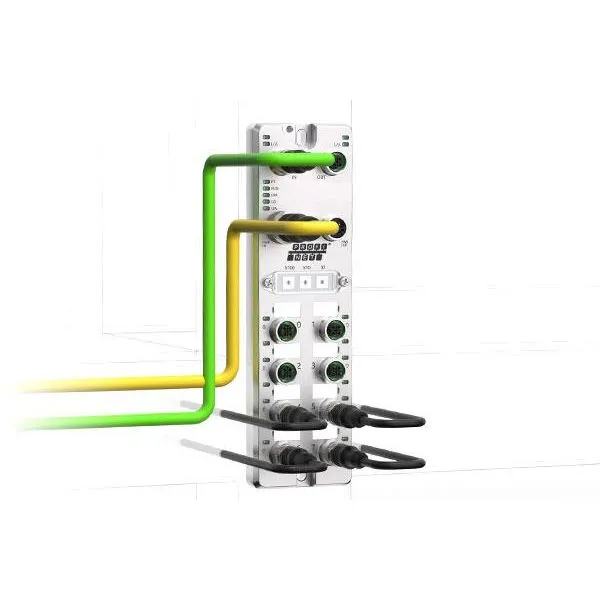
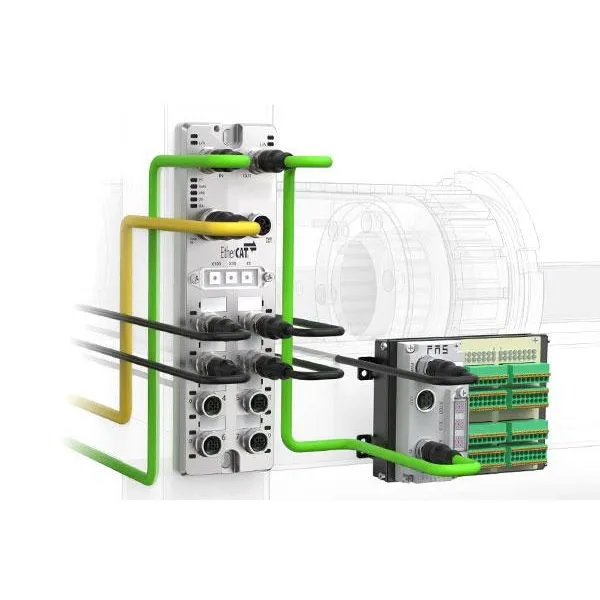
The IO-Link master also plays a vital role in system diagnostics. It can detect errors and malfunctions in the connected devices. If a device fails or starts to behave abnormally, the master will generate an alarm and send a notification to the control system. This early detection helps you to prevent costly downtime and keep your production running smoothly.
And then there are the Valve Islands. These are an important part of many industrial systems, especially in applications where fluid control is required. The IO-Link master can communicate with the valve islands, allowing you to control the flow of fluids with precision. You can open and close valves, adjust flow rates, and monitor the status of the valves in real-time.
In a nutshell, the IO-Link master is the heart and soul of an IO-Link system. It provides power, manages communication, configures devices, collects data, enables remote parameterization, interfaces with different networks, performs diagnostics, and controls valve islands. Without it, the whole system would lack the coordination and intelligence needed to function effectively.
If you're in the market for an IO-Link system, or if you're looking to upgrade your existing setup, I'd love to have a chat with you. The role of the IO-Link master is just one piece of the puzzle, and I can help you understand how all the components work together to create a powerful and efficient industrial automation solution. Whether you're a small business or a large corporation, we've got the expertise and the products to meet your needs. So, don't hesitate to reach out and start the conversation about how we can take your automation to the next level.
References
- Industrial Communication Handbook: Fundamentals, Standards and Networks by Hartmut Zehetmeier and Peter Kugel
- IO-Link: The Standard for Communication with Sensors and Actuators by various industry experts