
Hey there! As a supplier of Siemens HMI, I often get asked a bunch of questions. One question that pops up quite frequently is, "Can Siemens HMI be connected to sensors?" Well, let's dig into this topic and find out.
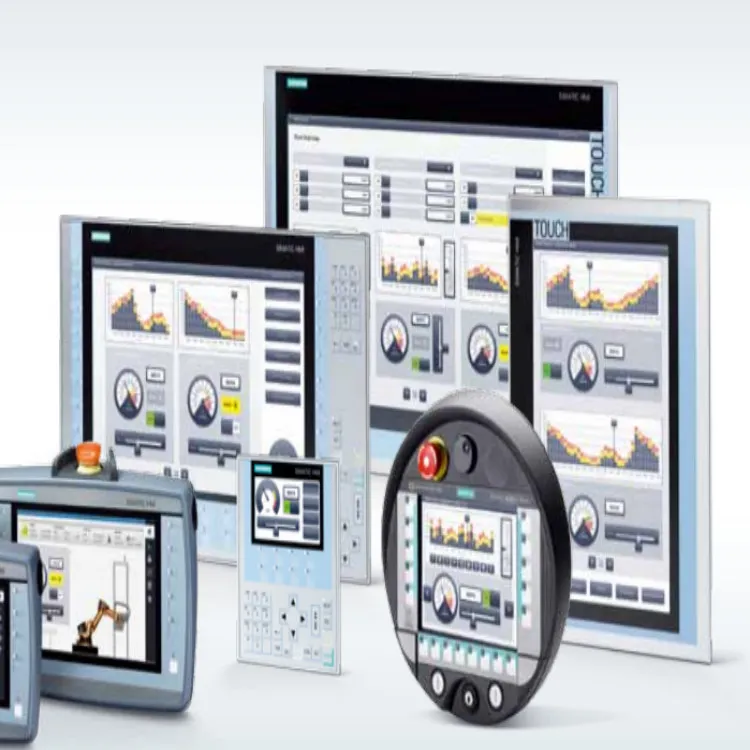
First off, let's talk a bit about what Siemens HMI is. There are different types, like the Siemens Basic HMI and the Siemens SIMATIC HMI. These HMIs are pretty cool. They're the interface between the operator and the machine. You can think of them as the control center where you can monitor and control different processes.
Now, sensors. Sensors are everywhere in industrial settings. They're used to measure all sorts of things like temperature, pressure, level, and flow. They play a crucial role in making sure everything in a system is running smoothly. So, the big question is, can these two work together? The answer is a big yes!
Siemens HMIs are designed to be flexible and compatible with a wide range of sensors. This is a huge advantage in the industrial world. You see, different industries have different requirements. For example, in the food and beverage industry, you might need sensors to monitor the temperature of a cooking process. In the automotive industry, sensors could be used to measure the pressure in a hydraulic system.
Let's take a closer look at how the connection between Siemens HMI and sensors works. There are a few ways to do this. One common method is through communication protocols. Siemens HMIs support a variety of communication protocols such as Modbus, Profibus, and Ethernet/IP. These protocols act as a language that allows the HMI and the sensors to talk to each other.
For instance, if you have a temperature sensor that uses the Modbus protocol, you can easily connect it to a Siemens HMI that also supports Modbus. Once the connection is established, the HMI can receive data from the sensor, like the current temperature reading. You can then display this data on the HMI screen, so the operator can keep an eye on it.
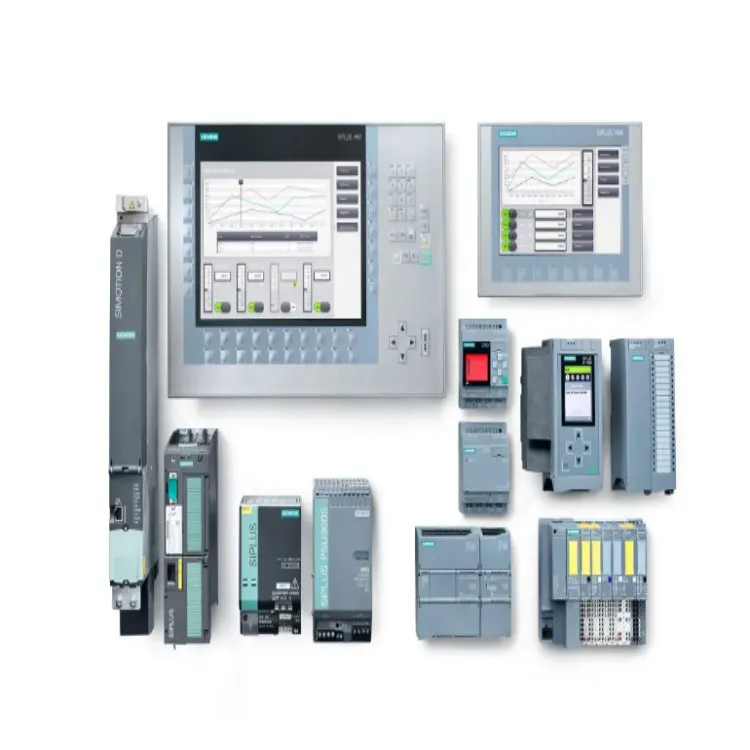
Another way to connect sensors to Siemens HMIs is through input/output (I/O) modules. These modules act as a bridge between the HMI and the sensors. They convert the signals from the sensors into a format that the HMI can understand. For example, if a sensor sends an analog signal, the I/O module can convert it into a digital signal that the HMI can process.
One of the great things about Siemens HMIs is their user - friendly configuration tools. Even if you're not a tech wizard, you can use these tools to set up the connection between the HMI and the sensors. You can define things like the data type, the sampling rate, and the alarm limits. This gives you a lot of control over how the system operates.
Let's talk about some real - world applications. In a water treatment plant, sensors are used to measure the level of water in tanks, the quality of the water, and the flow rate. By connecting these sensors to a Siemens HMI, operators can monitor all these parameters in real - time. They can also set up alarms so that if something goes wrong, like the water level getting too low, they'll be notified immediately.
In a manufacturing plant, sensors can be used to detect the presence of parts on a conveyor belt. The HMI can then control the speed of the conveyor belt based on the sensor data. This helps to optimize the production process and improve efficiency.
Now, you might be wondering about the reliability of these connections. Siemens is known for its high - quality products, and their HMIs are no exception. They're built to withstand harsh industrial environments. The communication protocols and I/O modules are also designed to be reliable, ensuring that the data from the sensors is accurately transmitted to the HMI.
However, like any system, there can be some challenges. One challenge is the compatibility between different sensor models and the HMI. Sometimes, you might need to do a bit of research to make sure that the sensor you have will work with the Siemens HMI you're using. But don't worry, Siemens has a large support network, and you can always reach out to them for help.
Another challenge could be the wiring. Making sure that the sensors are properly wired to the HMI or the I/O modules is crucial. Incorrect wiring can lead to data errors or even system failures. But again, with proper installation and testing, these issues can be avoided.
In conclusion, the answer to the question "Can Siemens HMI be connected to sensors?" is a definite yes. The flexibility, compatibility, and user - friendly configuration of Siemens HMIs make them a great choice for connecting to a wide range of sensors. Whether you're in the food and beverage industry, automotive industry, or any other industrial sector, you can benefit from this connection.
If you're interested in learning more about how Siemens HMIs can be connected to sensors or if you're looking to make a purchase, feel free to reach out. We're here to help you find the best solution for your needs. Let's start a conversation about how we can improve your industrial processes together.
References
- Siemens official documentation on HMIs and communication protocols
- Industry reports on the use of HMIs and sensors in different sectors